| Acmon
or Lupine
Blue Plebejus acmon or lupini ssp. unk. Immatures Species is being studied to determine identity |
| Home - Butterflies - Details |
| Adults |
Pupa on October 17, 2006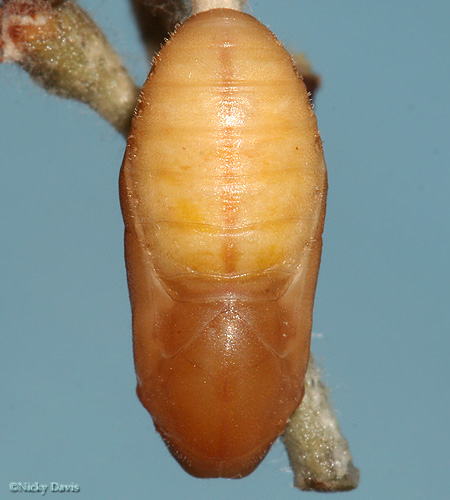 |
Pupa
on October 17, 2006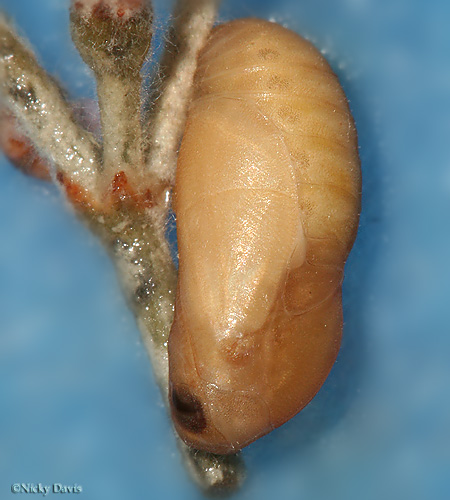 |
Pupa at 5:40 P.M. October 19, 2006 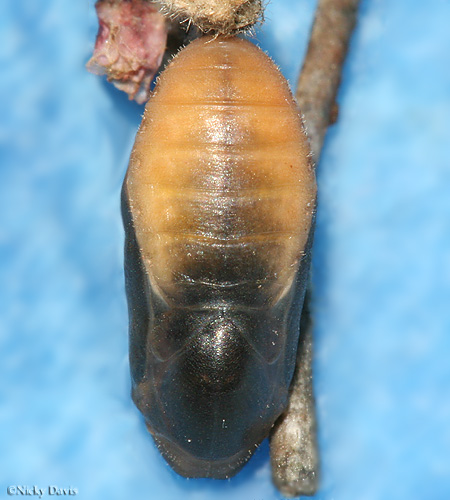 |
Pupa at 5:40 P.M. October 19, 2006 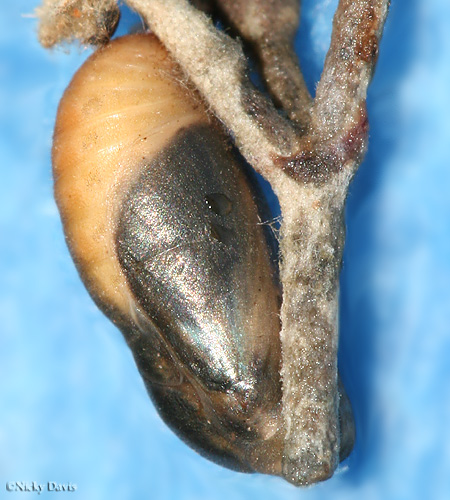 |
| Pupa
at 4:38 P.M. October 20, 2006 Butterfly emerged 6:50P.M. 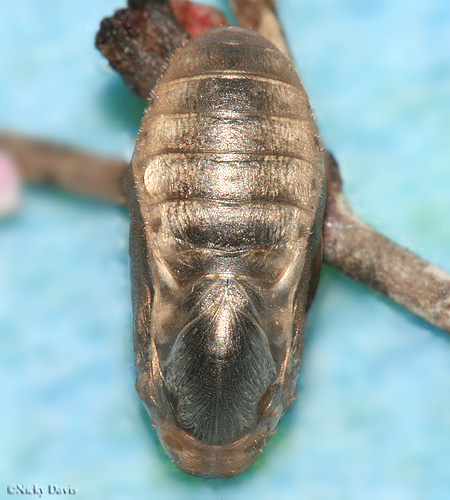 |
Pupa at
4:38 P.M. October 20, 2006
Butterfly emerged 6:50P.M. 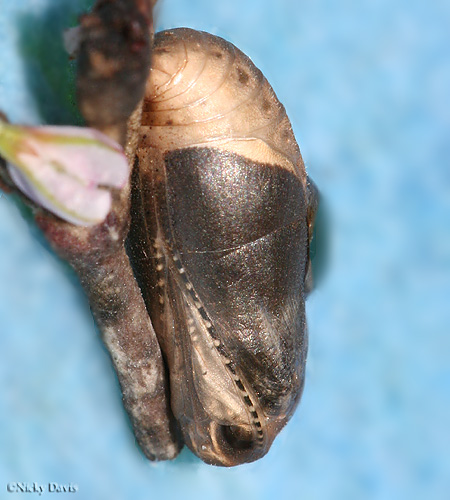 |
| PHOTO DETAILS -
©Nicky Davis Larva located October 5th and 7th 2006, Jericho Dunes, Near Lynndyl, Millard County, Utah Elevation 4933 feet North 39º 38.740 feet, West 112º 18.357 feet This larva was located on a Eriogonum kearneyi and was thought to be another Euphilotes pallescens, but it turned out to be Plebejus acmon or lupini ssp. unknown. The larvae were fed Redroot Buckwheat Row 1., 2., 3. of Pupa with dates listed "As far as the bugs from the Jericho Dunes, I am not exactly sure what those are (and I suspect nobody really knows, yet). They might be a lupini, or most likely a texanus (if texanus proves to be a separate species from lupini as Opler believes). They look very much like the texanus that fly on the E Colorado prairie in association with Eriogonum effusum (and those may or may not be "real" texanus). The acmon-lupini group requires some major revision. While the identity and distribution of "true" acmon is probably nearly known now (basically Baja, CA, OR, S WA, far SW ID and far W NV), the various subspecies currently lumped under "lupini" in the Pelham Catalogue and on BOA probably represents 4 or 5 distinct species, at least. It will take a lot of time to sort these out... " Andy Warren Host Plant
 |