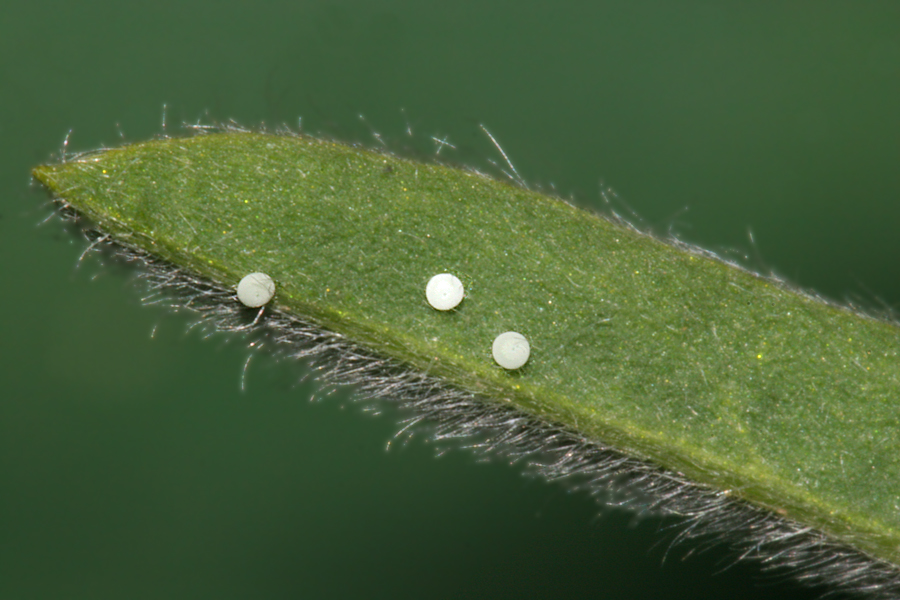
Ova
- Oviposited on June 25, 2008
Using lupine from the same area
|
Larvae
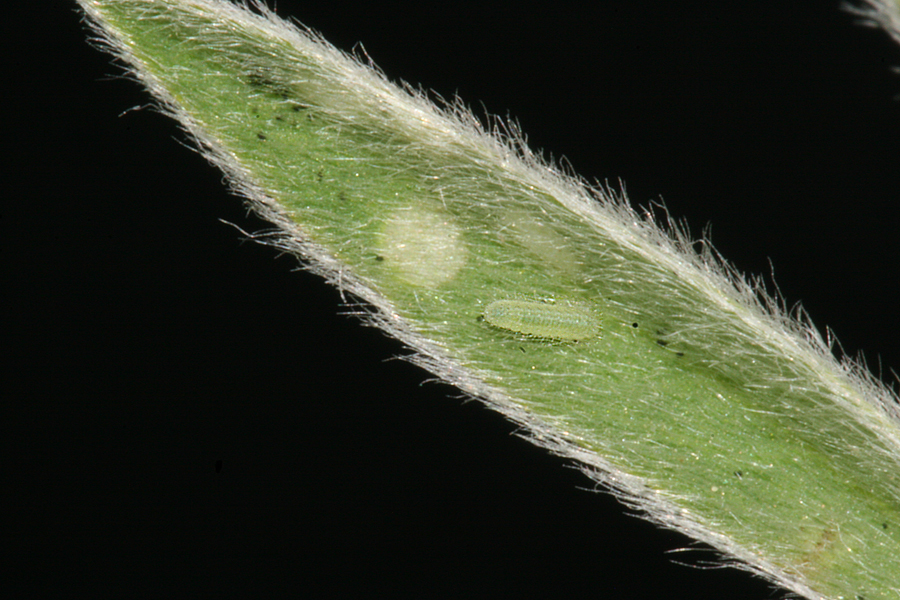
Hatched June 30th and
photo
taken July 2, 2008 |
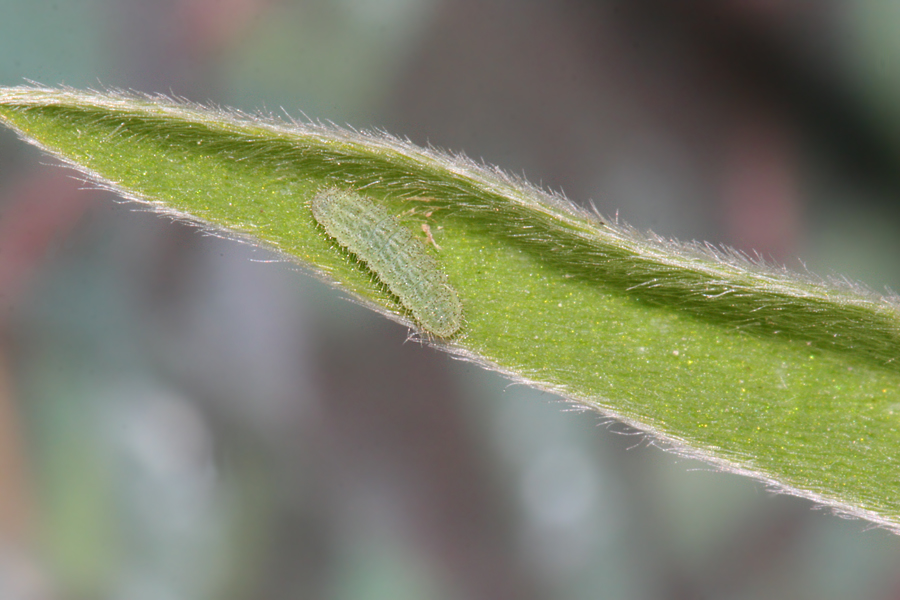
| Molted to 2nd instar
on July 5th,
photo taken on July 6th 2008 |
| Molted to
3rd Instar on July 8th, photo on July 11th |
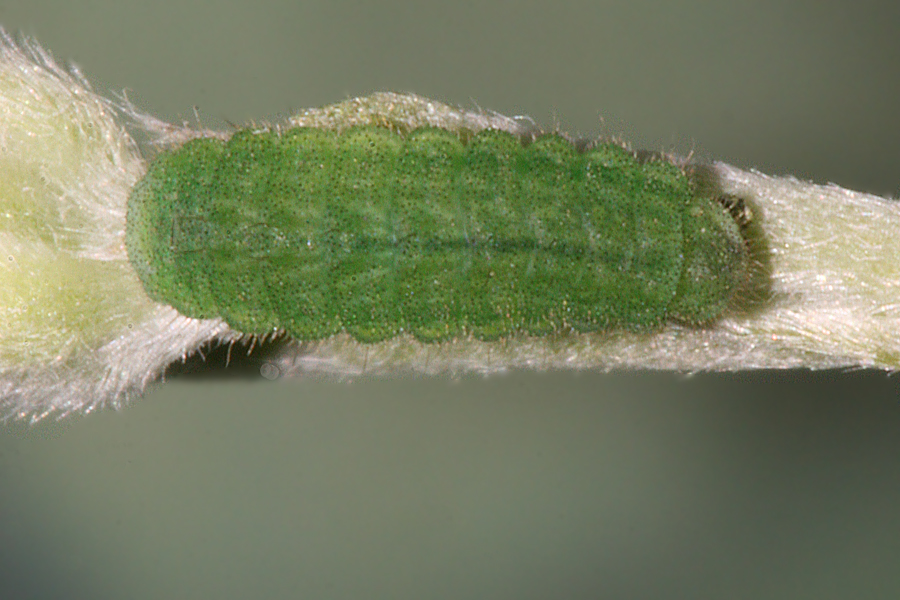
| Molted to
3rd Instar on July 8th, photo on July 11th |
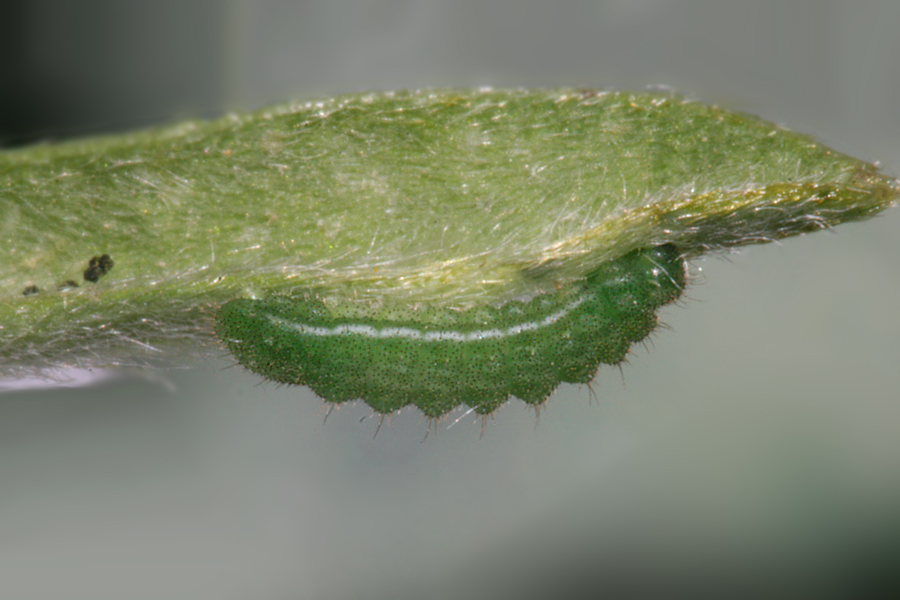
| 4th
Instar #1 on July 15th |
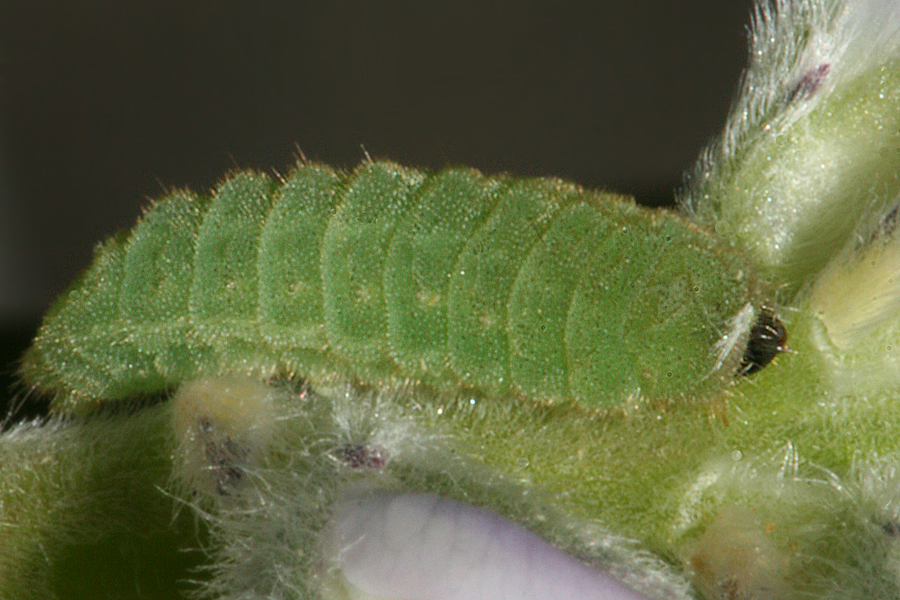
| 4th
Instar #1 on July 17th - yellowish orange spots are pollen
|
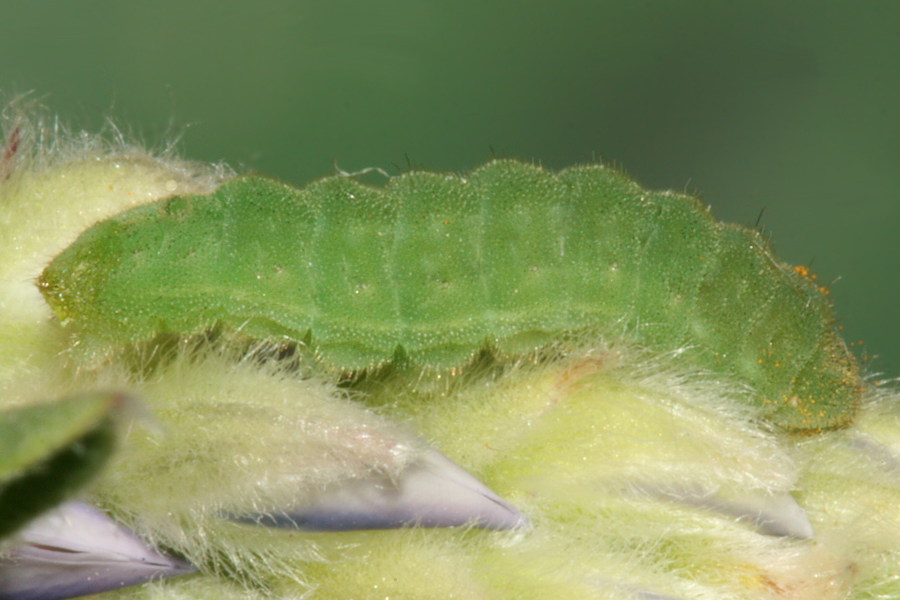
| 4th
Instar #1 - July 17th |
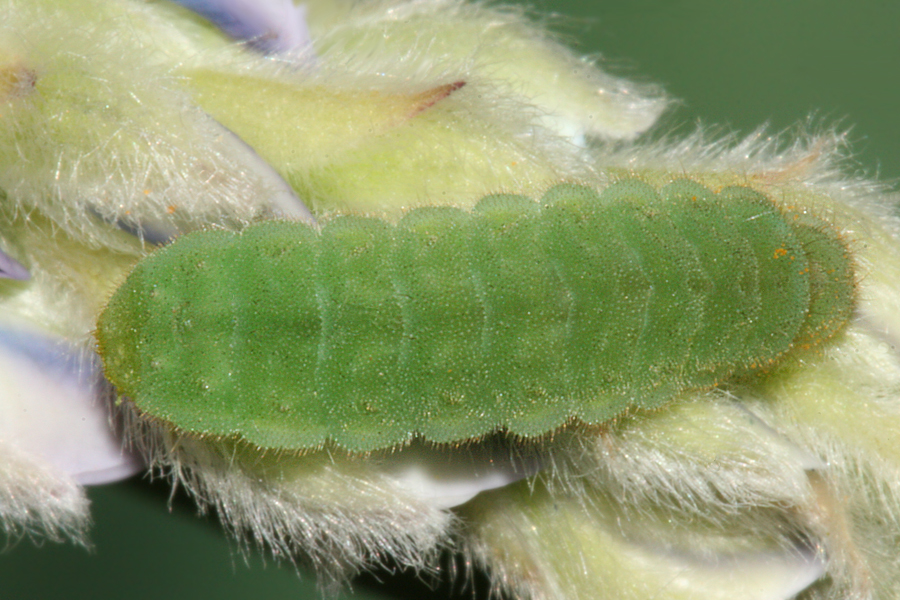
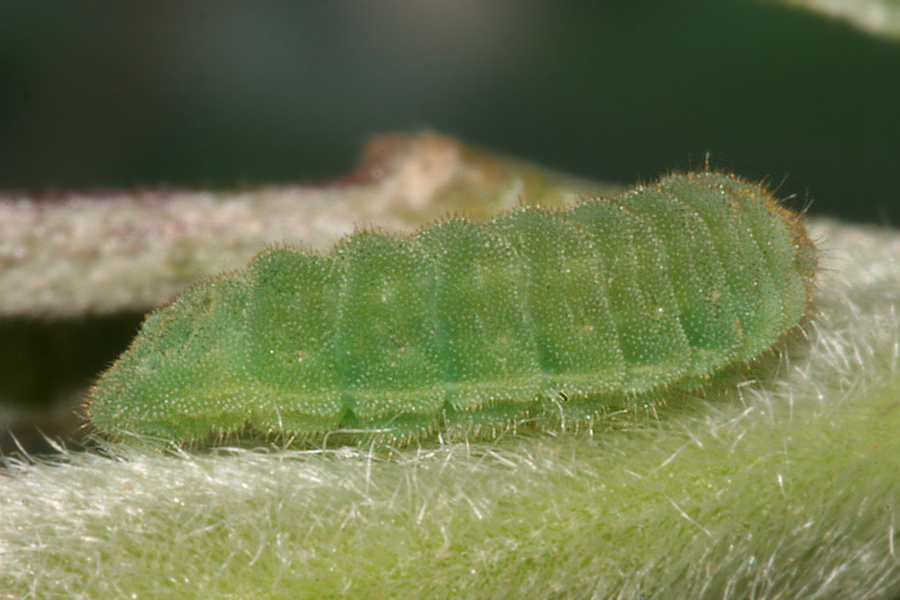
4th instar #2 shows pale
bluish-green spot on
the thoracic shield - July 19th |
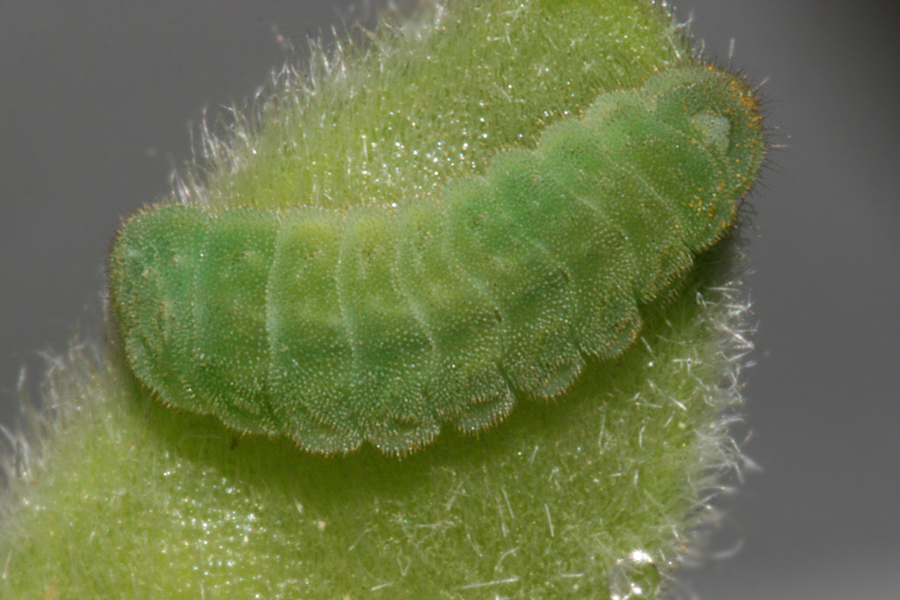
| 4th
instar #2 - July 19th |
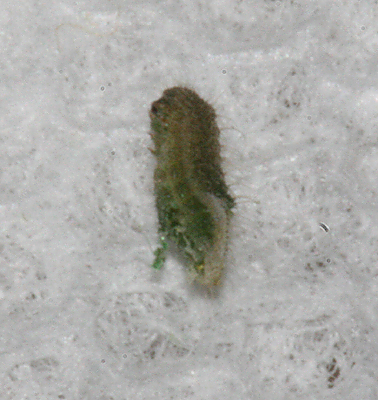
| This caterpillar was half eaten by
one of the other caterpillars |
Pupae
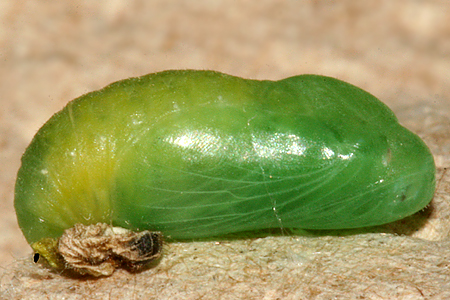
| New
pupa formed July 26th |
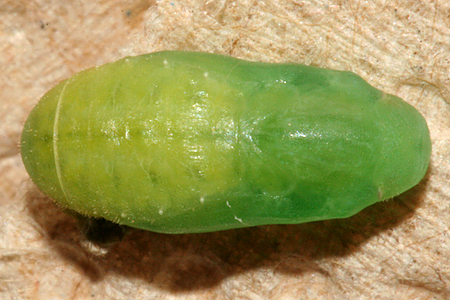 |
 |
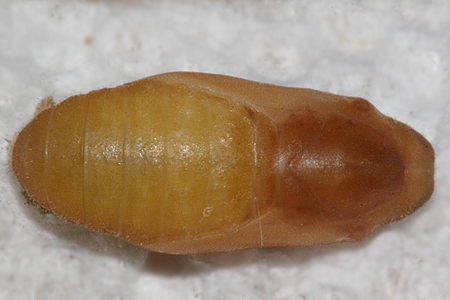
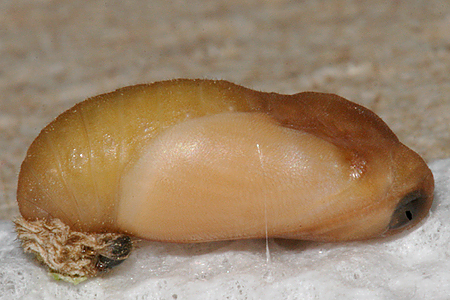
8
day old pupa
showing eye developing on lateral view
|
 |
 |
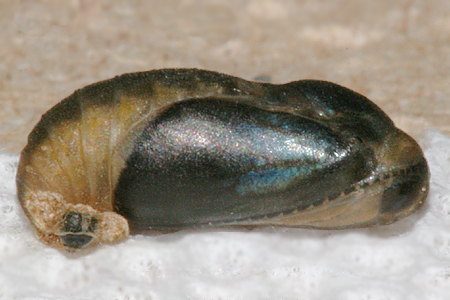
10 day old
pupa - 12 1/2 hours before male butterfly emerged
|
 |
 |
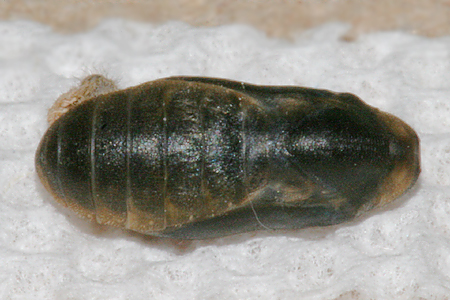
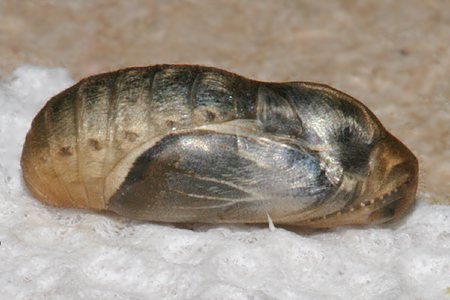
10
day old pupa - 1 3/4 hours before
adult male emerged
|
 |
Photo
Details - ©Nicky Davis
Located
females at Strawberry
Reservoir, Wasatch County, Utah on June 24, 2008.
Elevation
7700 feet
N.
40.09.85, W. 111.11.517
Laid
eggs on June 25th and the larvae hatched on June 30,
2008. These normally hibernate as 2nd instar
after turning brown per James A. Scott's Butterflies of North
America. I reared them under 24x7 room light by an east facing
window, changed to fresh host plant daily and some of these went
straight through to adult butterflies.
Ova
Females
began
ovipositing on June 25th using the lupine from Strawberry
Reservoir. ( 5 days as ova)
Larvae
Larva
hatched June 30th, photo taken on July 2, 2008. Larvae fed
on lupine from Strawberry Reservoir 23 to 26 days before pupating. (5
days as first instar)
Molted
to 2nd instar
on July 5th, photo taken on July 6th (3 days as second instar)
Molted
to 3rd instar on July 8th, Left photo taken on July 11th,
right photo on July 13th (6-7 days as third instar)
Molted
to 4th and last instars on July 14th and 15th photo (7 days as
fourth instar)
Cannibalized
larva
photo
Pupae
Butterflies
emerged from pupae after about 10 days.
Sub-Species
information
"7700
feet elevation
in Wasatch Co. would make them pembina.
The borderline between pembina
and fulla (ardea) is real
fuzzy-
basically, a 1500 or 2000' chunk of real estate between the
deserts
and mountain habitats..."
Andy
Warren
Host
Lupine,
unknown species from
Strawberry Reservoir.
Notes
While the
Type Locality is in Montana, the name has traditionally been applied to
basically all northern intermontane icarioides from NW CO, N UT, WY,
SD,
MT, ID, N NV, E WA and E OR. The truth of the matter is, that the name
is
more of a dumping ground for a variety of populations, since as you
have
already noticed, one can observe subtle differences between populations
across this large area. From C UT, though C and S NV and E CA adults
tend
to be somewhat paler below, with rather reduced black spots, and these
are
called icarioides fulla (TL Mono Co., CA). Where pembina ends and fulla
begins is anyone's guess, and it can probably be defined largely on
elevation and habitat from S-C UT eastward; certainly the line between
then will pass through Utah somewhere. However, most populations in UT
and W CO have adults that fit both phenotypes, when enough adults are
examined. So it is kind of messy, but a broadly defined pembina is
probably better than another 10 or more subspecies of icarioides (since
we
already have 23 described ssp.), although in the future somebody will
most
likely "break up" pembina...
Andy Warren
Host
Plant

|
|