| Hedgerow
Hairstreak Satyrium saepium provo Female Eclosure |
| Home - Butterflies - Details |
| Immatures Male Eclosure Specimen |
| #4 Female emerged and climbed to
the top to inflate wings 7:24 A.M. - July 14, 2010 |
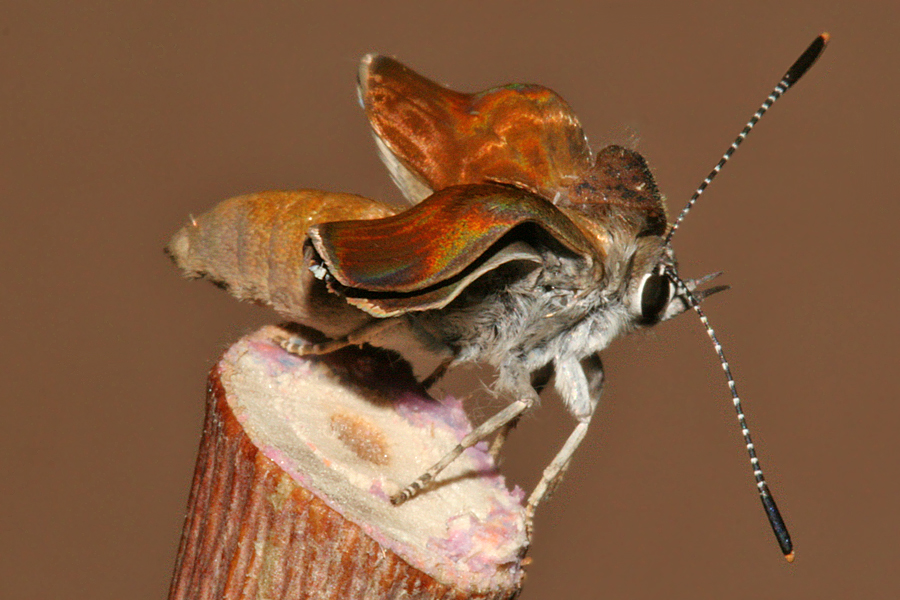
| Inflating Wings |
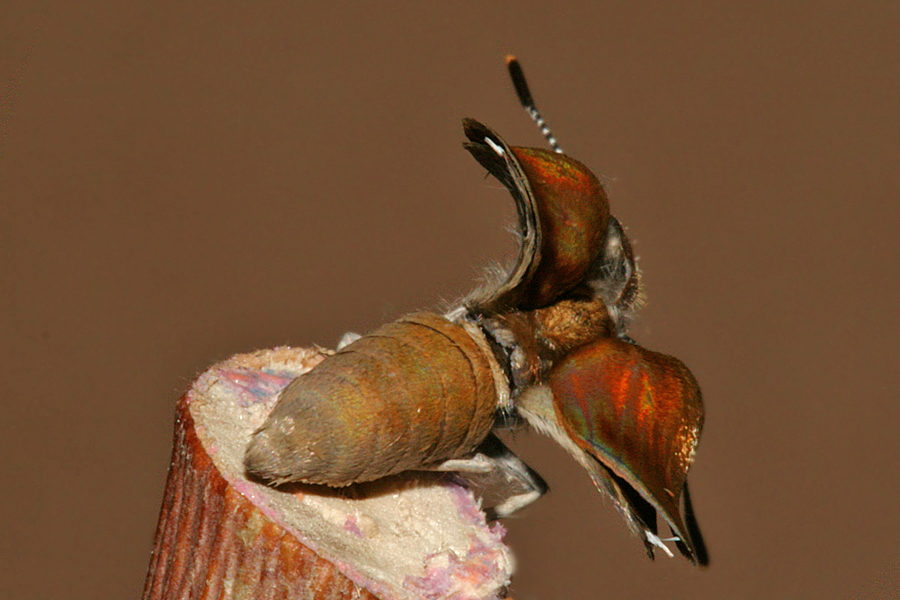
| Inflating Wings A piece of the pupal shell is still stuck to the butterfly |
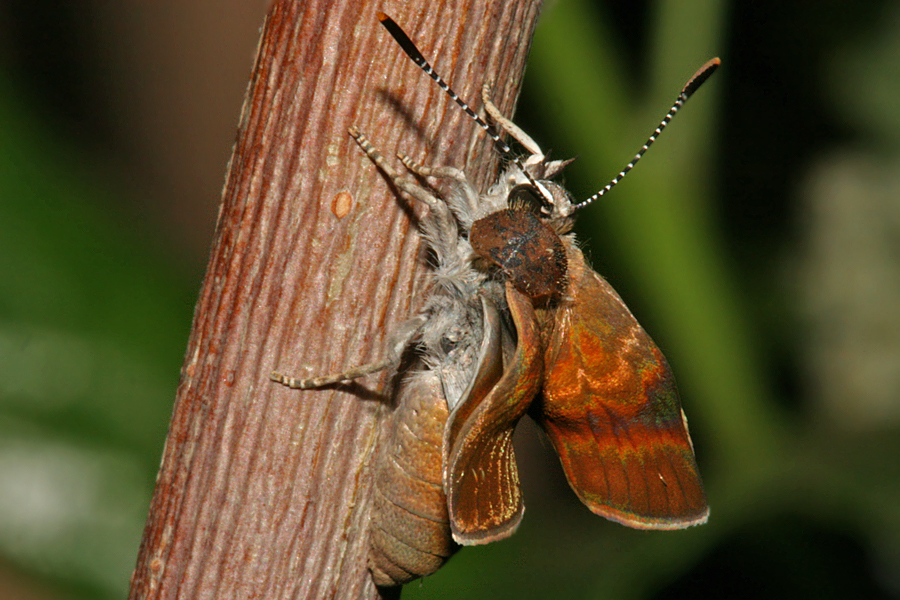
| Inflating Wings |
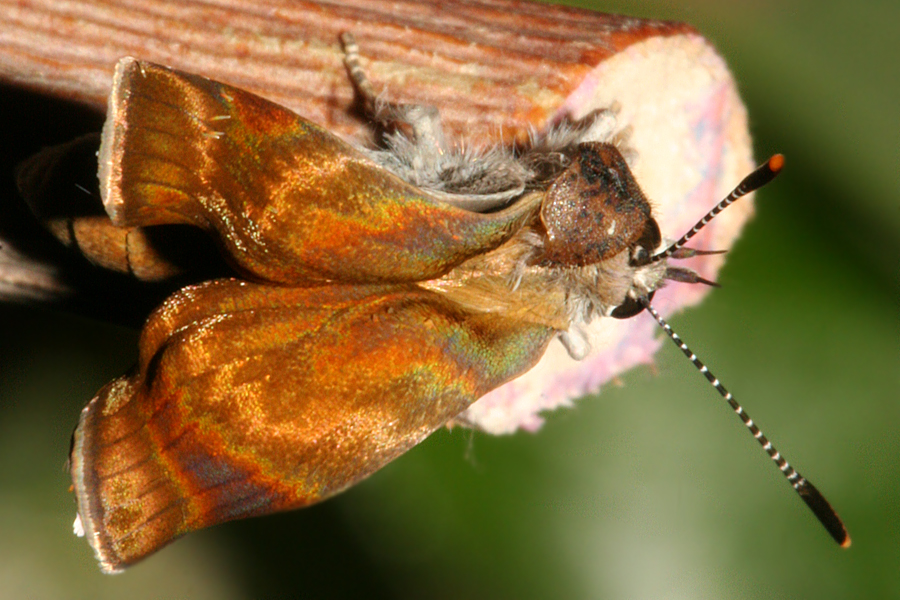
| Inflating Wings |
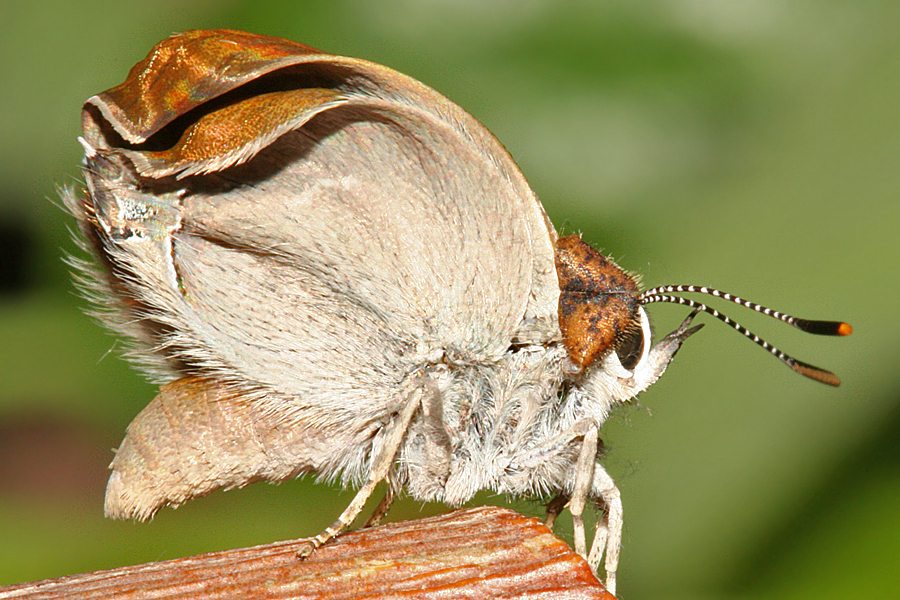
| Inflating Wings |
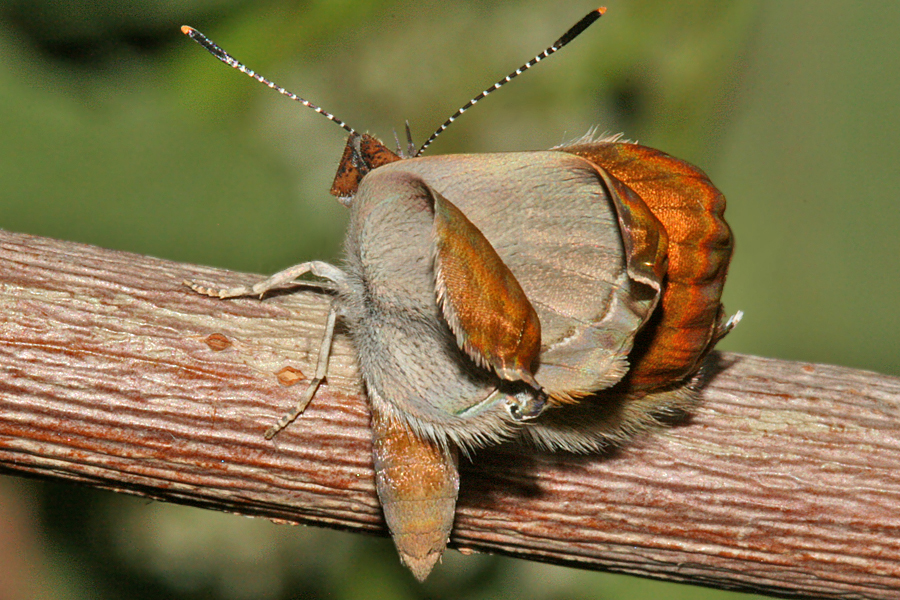
| Inflating Wings |
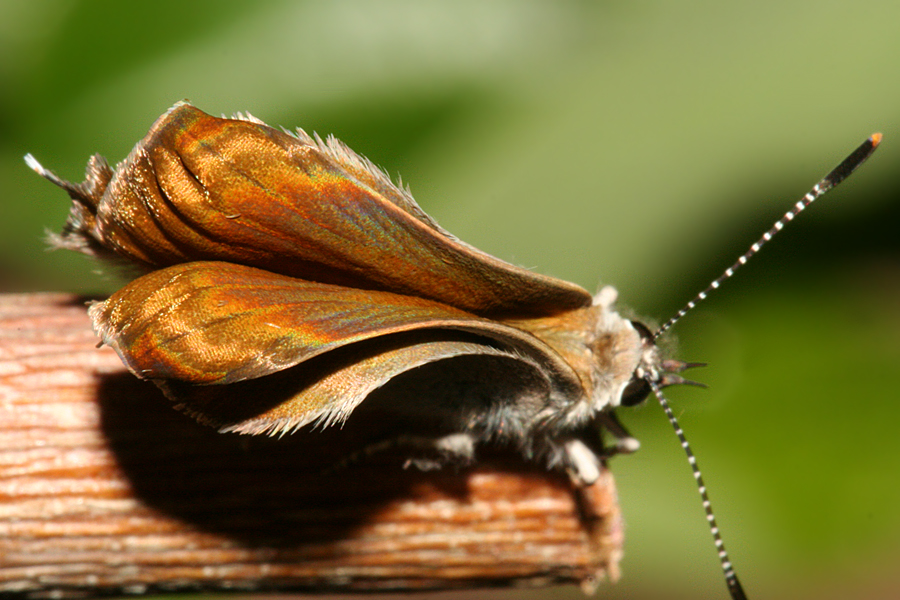
| Inflating Wings |
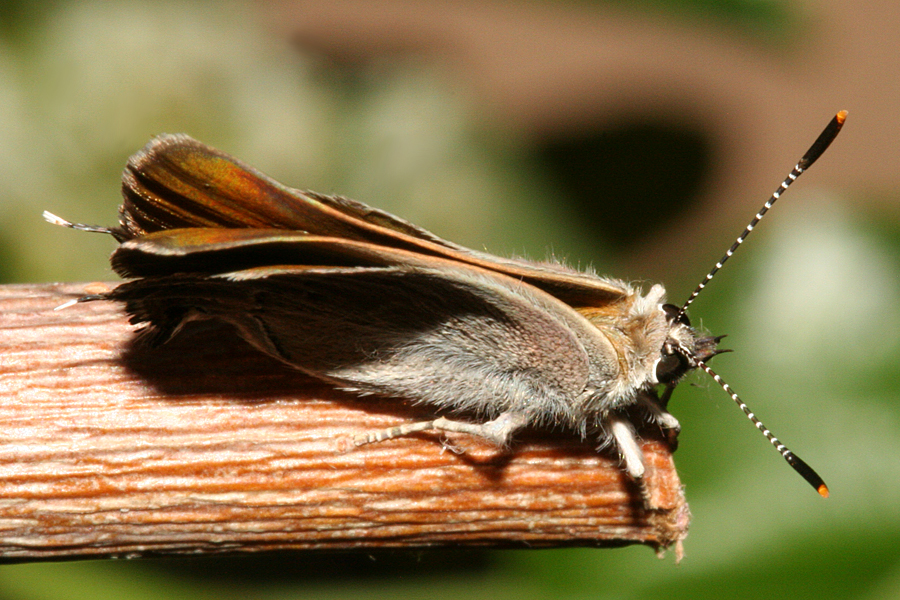
| Drying Wings |
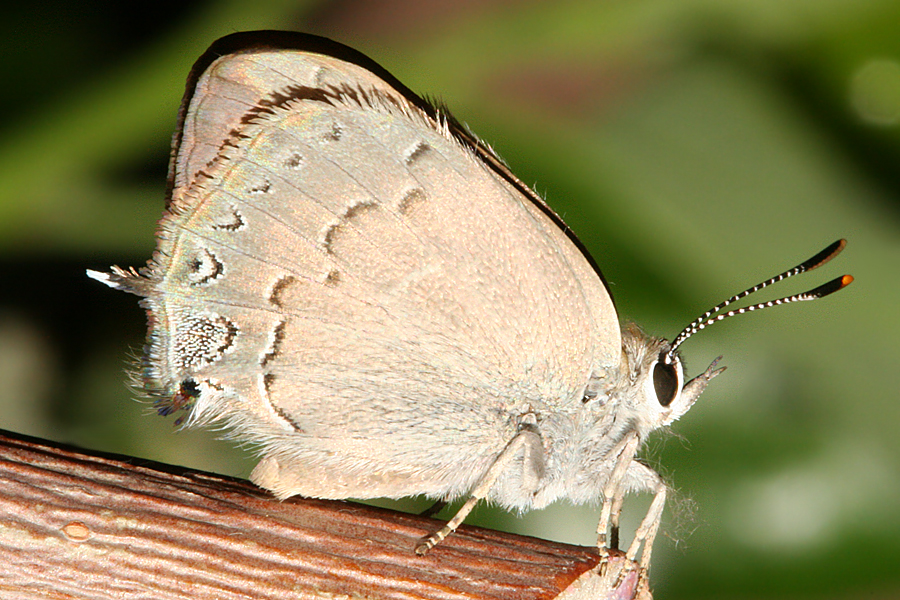
| Drying Wings The fuzzy fibers near her face came from inside the pupa |
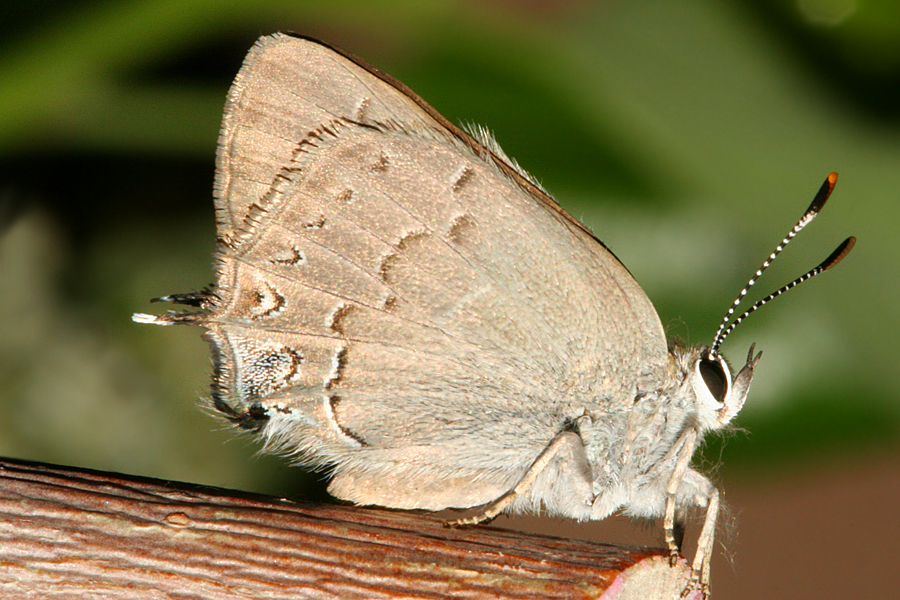
| Close-up of blue-tinged tailspot and white-tipped tails |
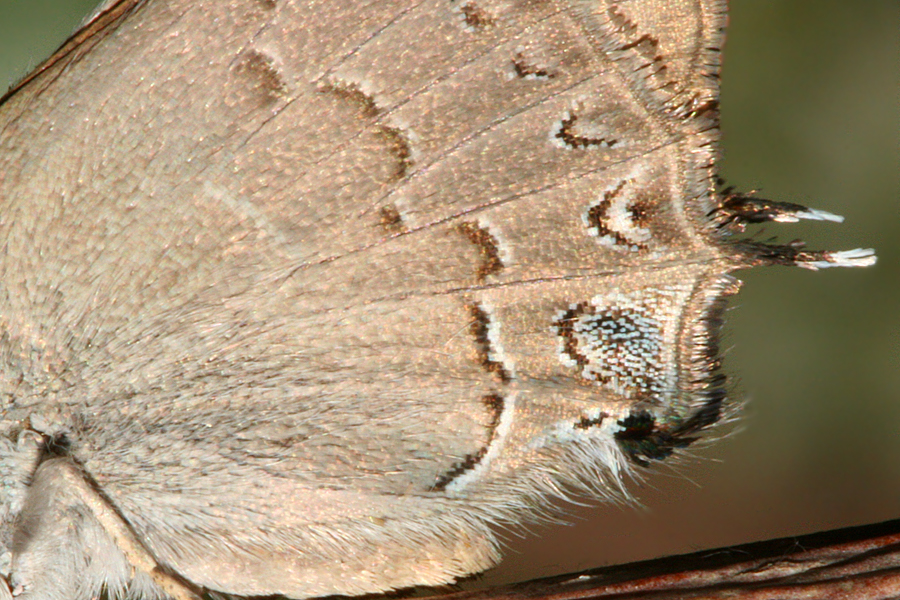
| PHOTO
DETAILS - ©Nicky Davis Female located 3 September 2009. Also, the "hitchhiker" found on Ceanothus velutinus near Upper Setting in the Uinta Mountains turned out to be a Satyrium saepium provo. LOCATION: Guardsman Pass, Big Cottonwood Canyon, Salt Lake County, Utah GPS: N. 40.36.567, W. 111.33.992 ELEVATION: 9152 feet Female oviposited 5 September 2009. She was placed in a plastic sandwich container with a loose host plant and a lid with a honey- water soaked cottonball in it. The container was placed under a 100 watt lamp for and hour to one and a half hours, then in the dark for a half hour, back to the light then dark and so on. The female laid most of the eggs on the rusty colored ( apparently injured) part of the ceanothus velutinous leaves. The eggs were left out for a few days then placed in a chiffon hammock which was suspended in a solo cup container holding some water in the bottom. The solo cup was then placed in a plastic sandwich box with a solo cup of water in it and ventilation holes in both sides. This container was placed in a fridge at 40 degrees for a couple of weeks then transferred to a small fridge at 30 to 35 degrees. The goal is to keep the ova hydrated but not so wet that they rot and also to keep at a temperature near what it is in their natural habitat. The ova were removed from hibernation 2 June 2010 when Ceanothus velutinus was available. The larvae hatched and were fed on bouquets of Ceanothus velutinus. They ate both the flowers and the leaves but most preferred flowers. This female eclosed 7:24 A.M. - July 14, 2010 LARVAL HOST PLANT Wild Lilac - Ceanothus velutinus LIFE HISTORY: Ovum: Ova hibernate. They hatched five days after being removed from hibernation. Larva: 25 days Pupa: 11 - 12 days Adult: unknown Broods: one Hibernation: Overwinter as ova  |