Cercyonis pegala paludum
Immatures
| Home - Butterflies - Details |
Scroll down to see all photos of IMMATURES
For other photos/information, click on your choice of
| ADULT FEMALE
MALE ECLOSURE
SPECIMEN
|
___________________________________________________________________________________________________________________________________________________________________________________________
____________________________________________________________________________________________________________________________________________________________________________________________
Ova
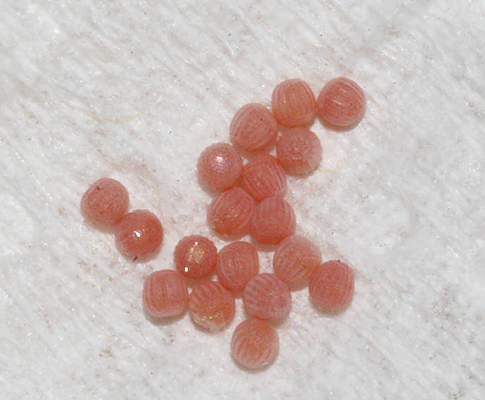
Larva Development
Larva #1 on August 21, 2007
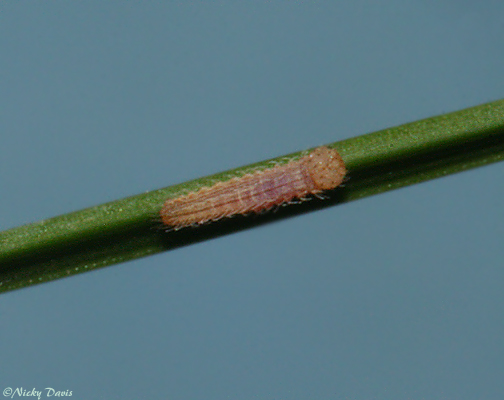
Dorsal view of first instar - September 23, 2007
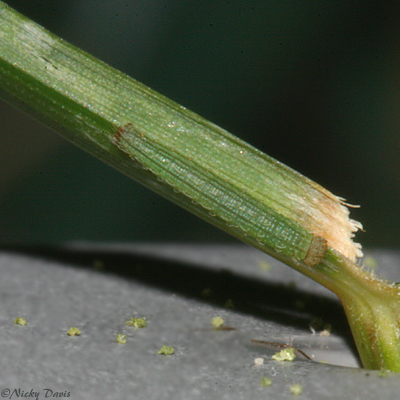
Lateral view of first instar - September 23, 2007
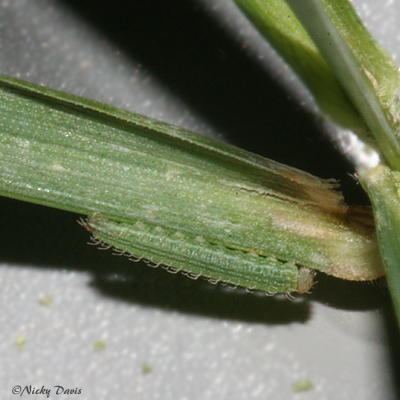
Larvae hatched August 20, 2007.
Larva #1 began feeding September 17, 2007
Second instar on September 26, 2007
2nd Instar - September 26, 2007
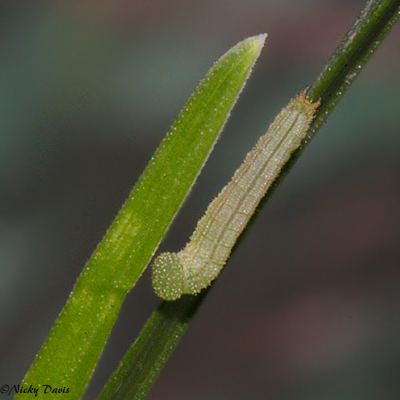
3rd Instar formed September 30, 2007- Photo taken October 2, 2007
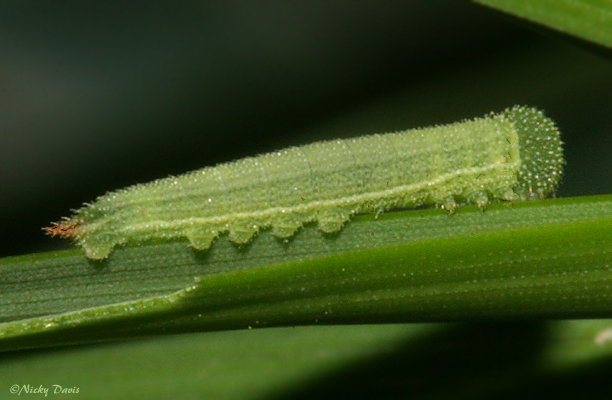
Molted to 4th October 6th then to 5th instar on October 12th
photos taken October 15, 2007
Dorsal
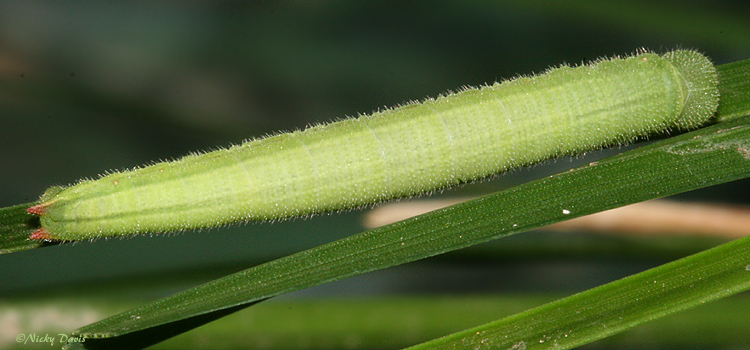
Lateral
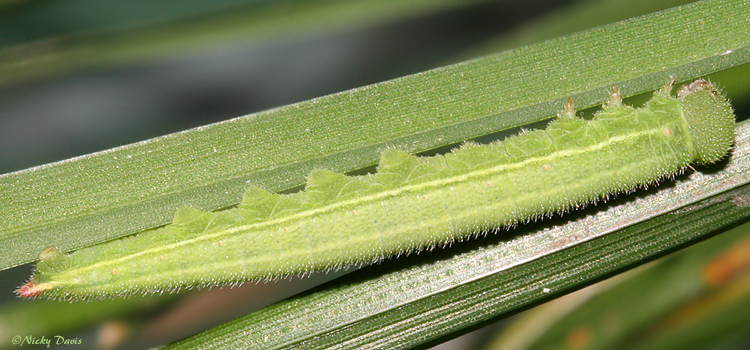
PUPAE DEVELOPMENT
#1
Pupa - Ventral -
October 24th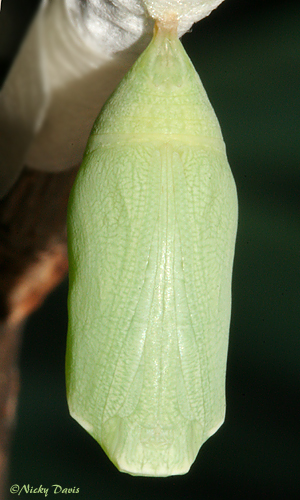 |
#1
Pupa - Lateral -
October 24th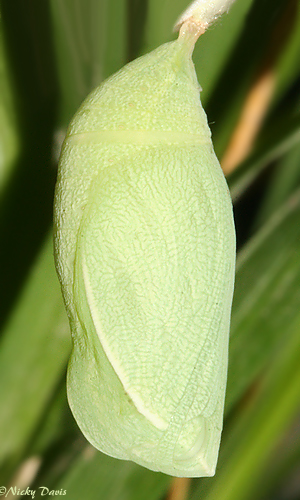 |
#1 Pupa - Ventral 3:30 P.M. November 5th 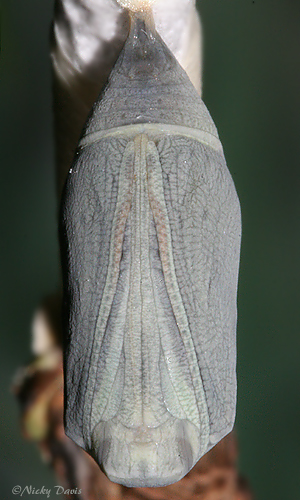 |
#1 Pupa - Lateral -
3:30 P.M. November 5th 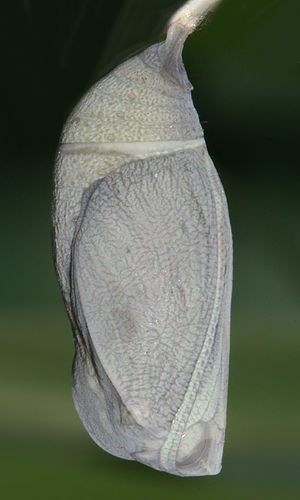 |
#1 Pupa - Ventral
9:50 P.M. November 5th 2 hours 15 minutes before butterfy eclosed 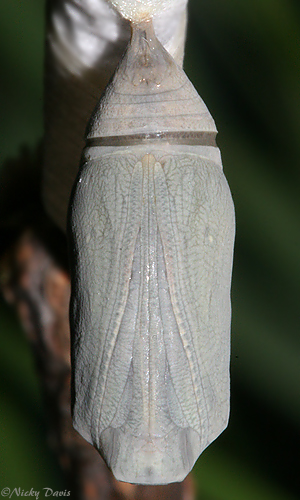 |
#1 Pupa - Lateral
9:50 P.M. November 5th 2 hours 15 minutes before butterfy eclosed 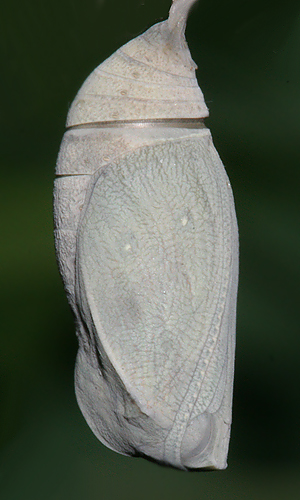 |
#4 Pupa formed November 10, 2007 with quite different colors in an effort to blend in with its surroundings. Some of these pupae were green and some were similar to the one shown below |
|
Ventral 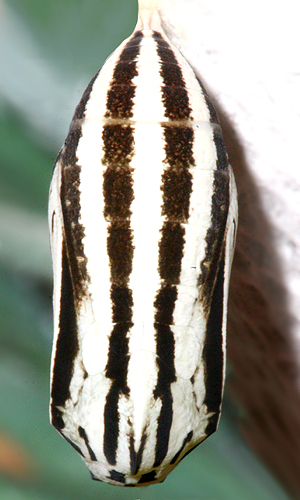 |
Lateral 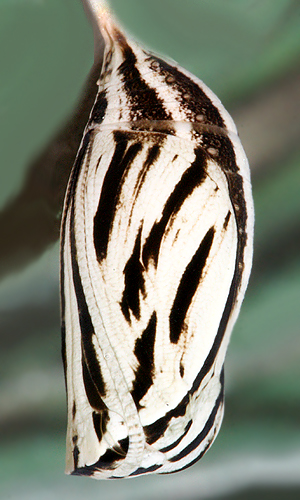 |
