Chlosyne whitneyi
Ova - Larvae - Pupae
| Home
- Butterflies - Details |
Scroll down for all SPECIMEN photos. For other photos/information, click on
| ADULT
FEMALE EMERGING
SPECIMEN |
_______________________________________________________________________________________
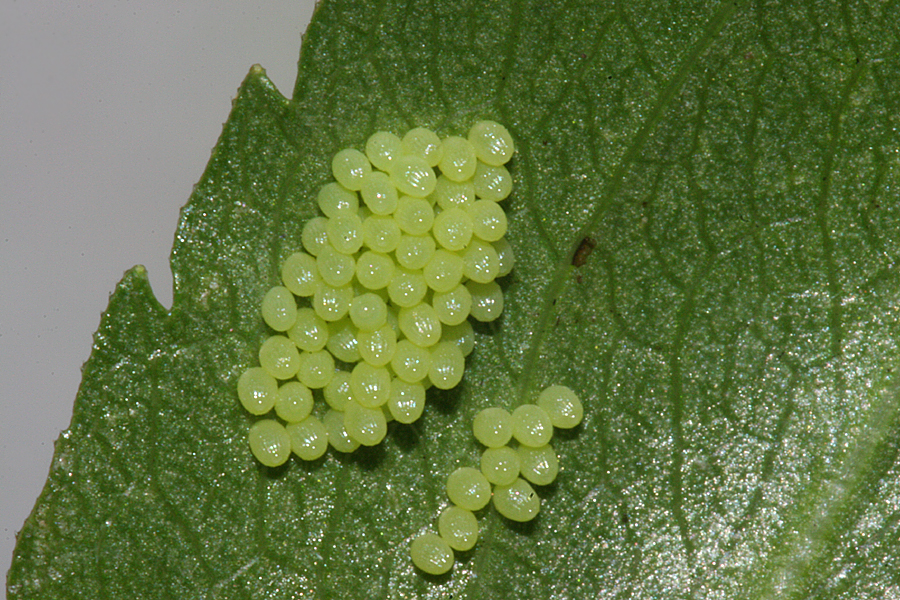
First Day First Instar
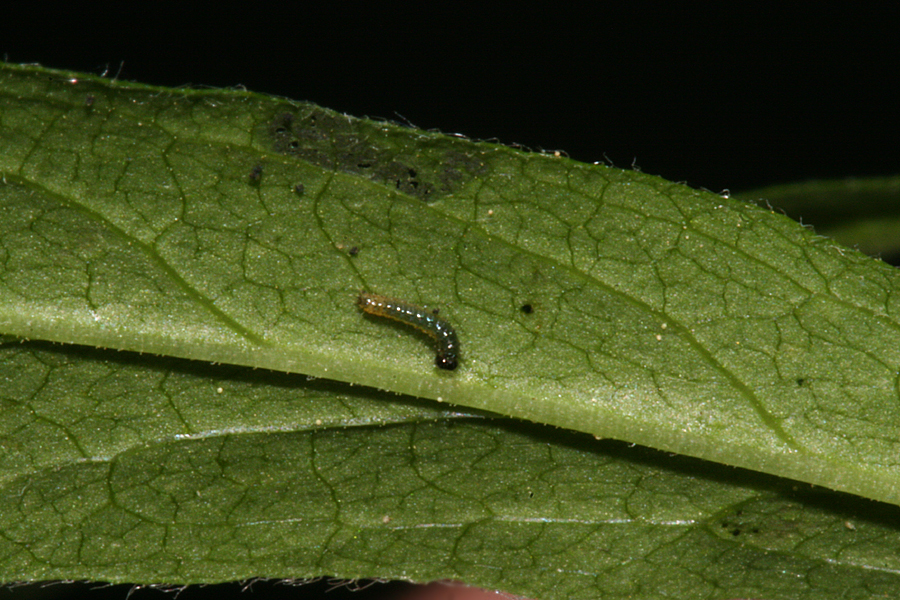
Molted to Second Instar 6 September 2011
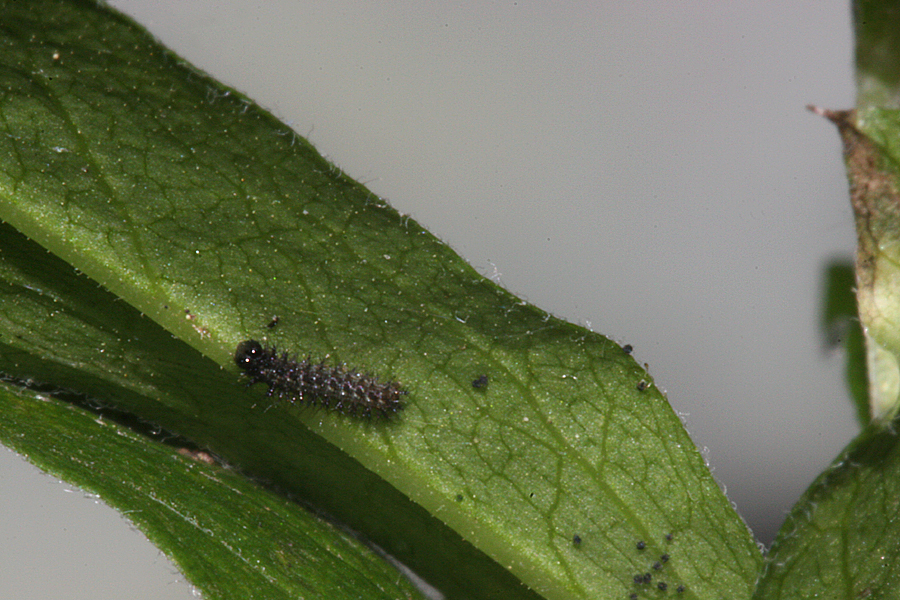
Molted to Third Instar 10 September 2011
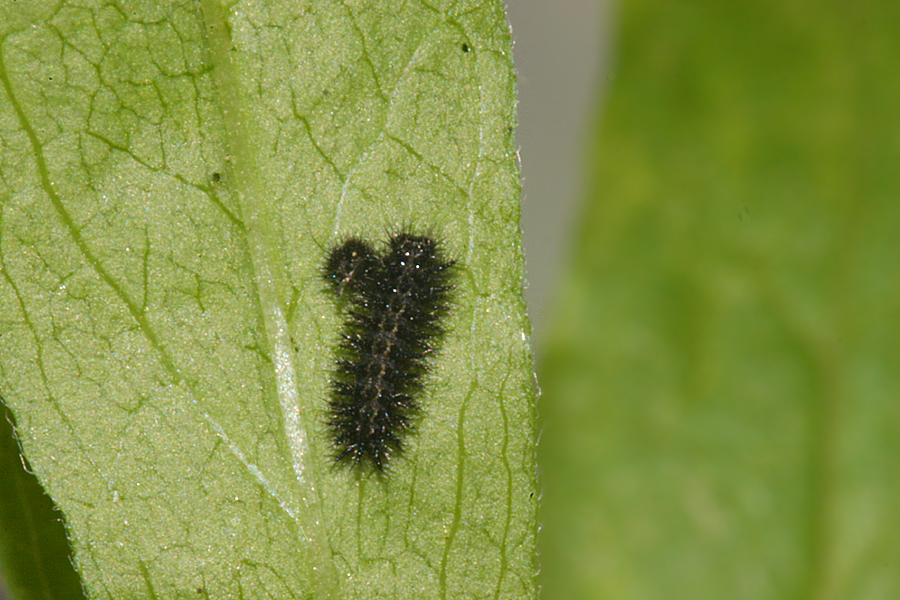
Molted to Fourth Instar 15 September 2011. After feeding a few days, the larva walked off the plant and stopped eating
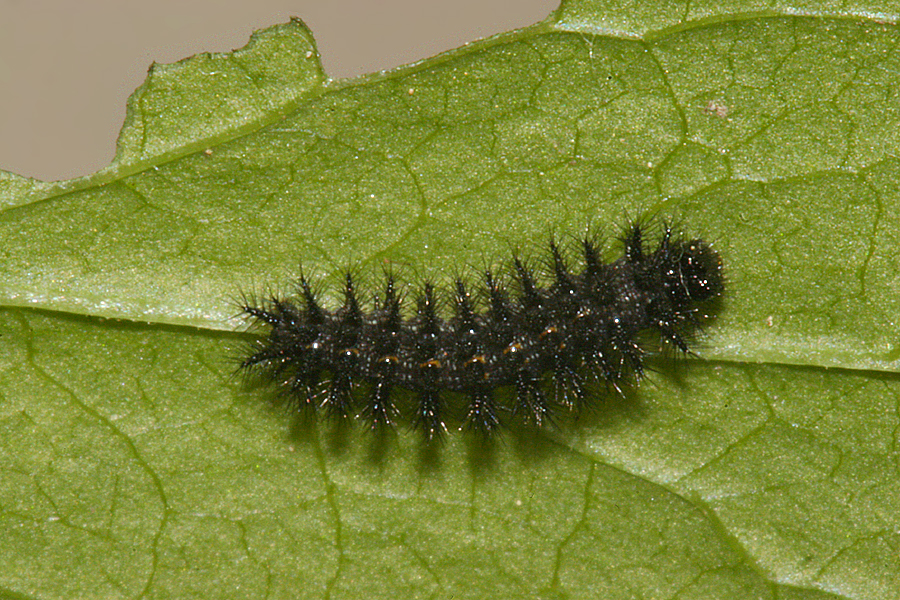
Molted again on 22 September 2011 and still refused to eat
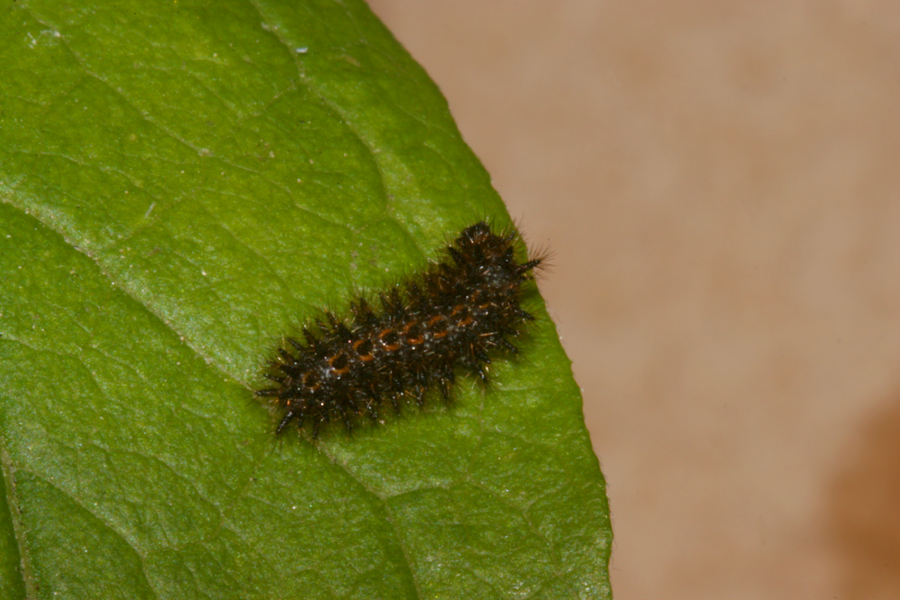
Molted again on 22 September 2011 and still refused to eat . They all went into diapause.
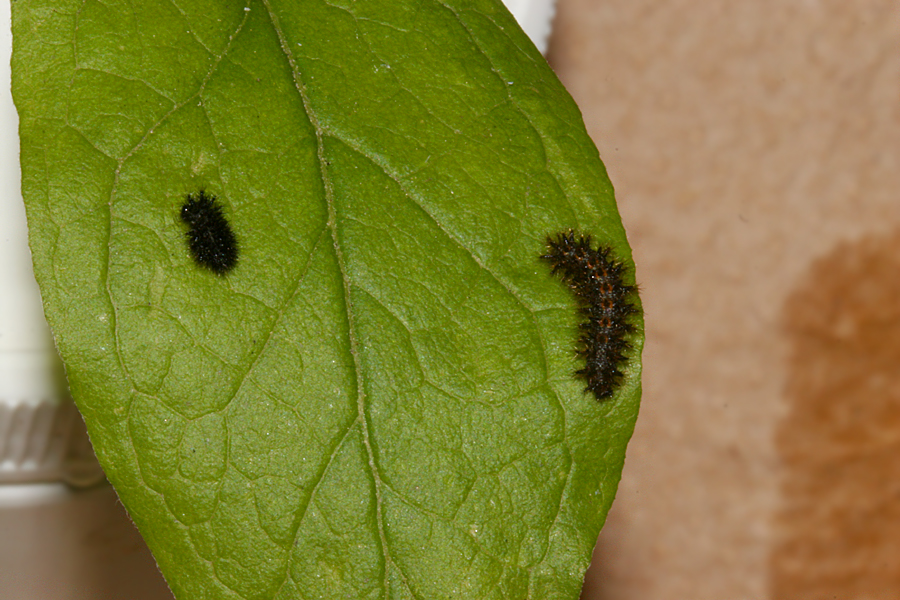
Fifth Instar
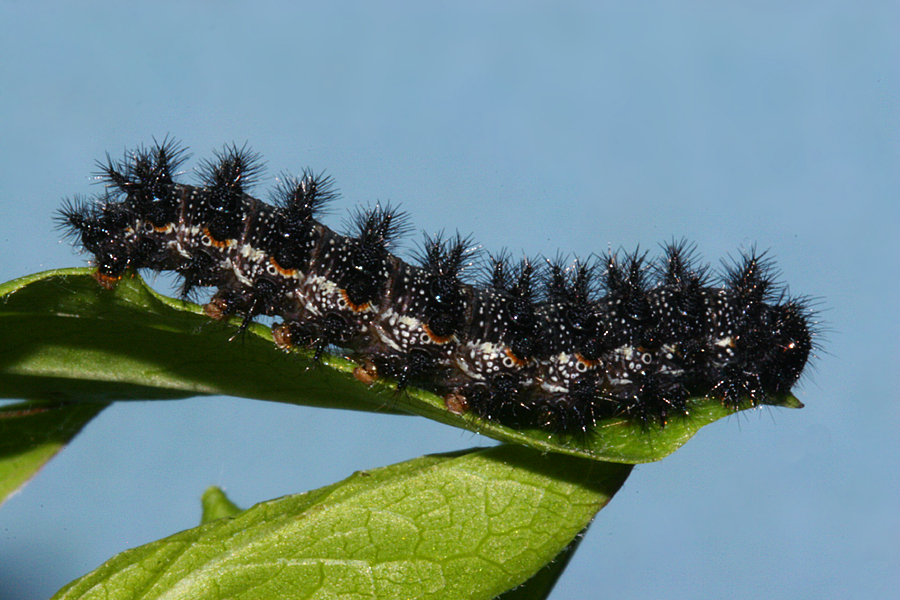
Fifth Instar
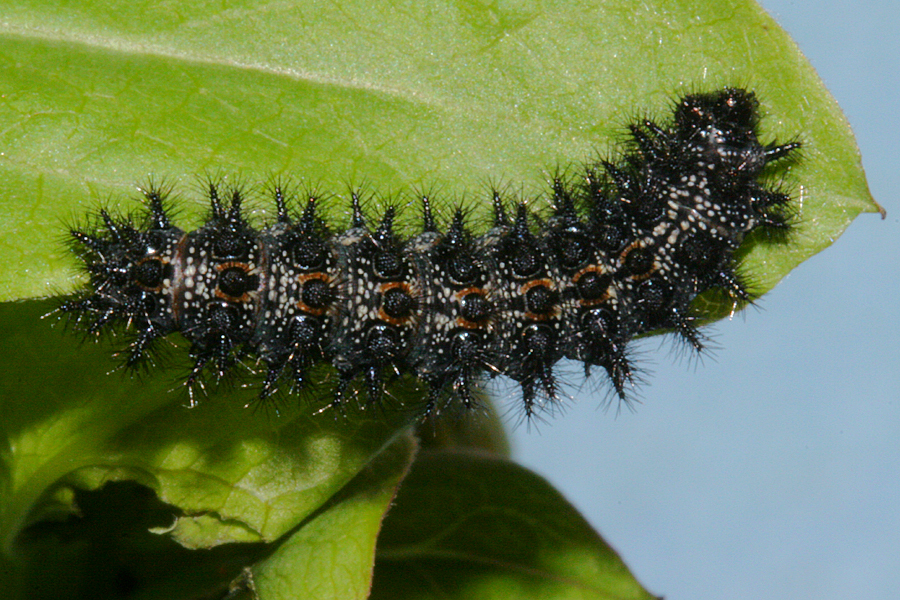
Pupae
| Formed "J" < 7 A.M. and Pupa 9:30 P.M. 15 May 2012 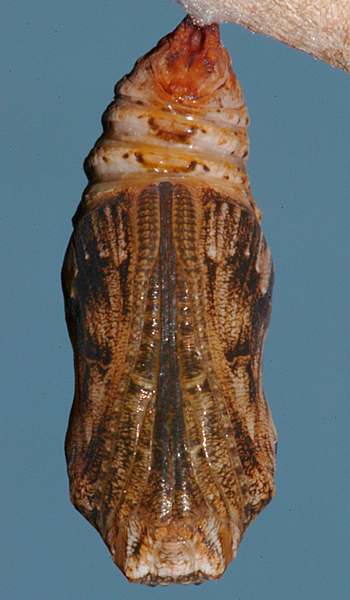 |
#3 formed "J" < 7 A.M. and Pupa 9:30 P.M. 15 May 2012 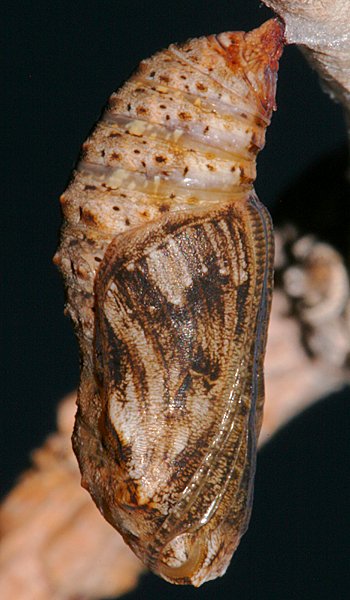 |
#3 formed "J" < 7 A.M. and Pupa 9:30 P.M. 15 May 2012 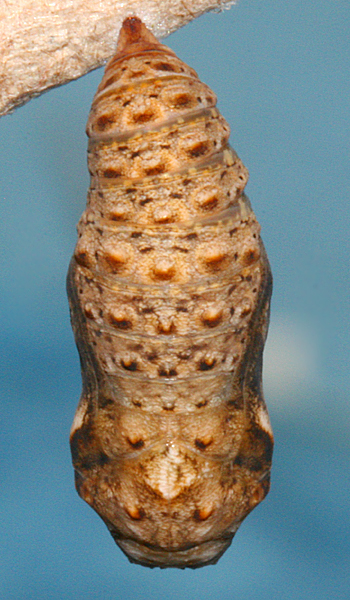 |
Developing Pupa - 22 May 2012 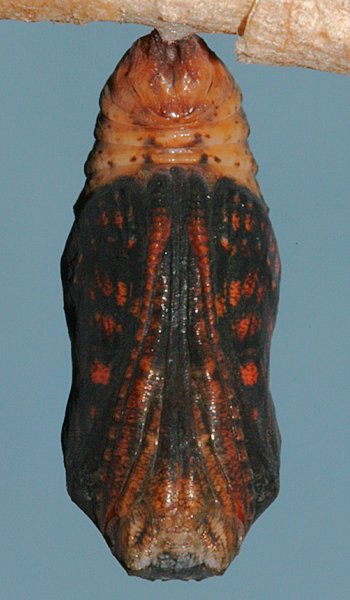 |
Developing Pupa - 22 May 2012 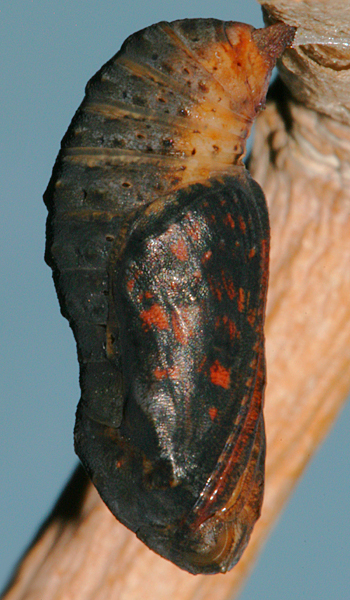 |
Developing Pupa - 22 May 2012 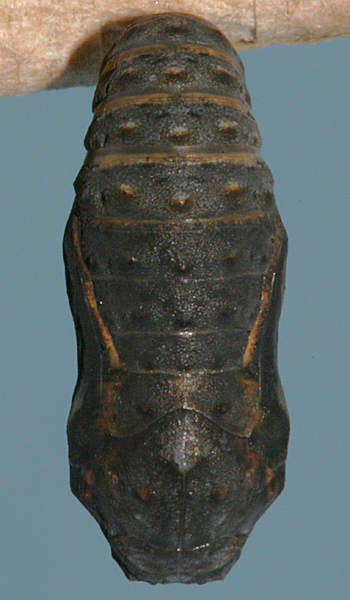 |
#4 Pupa 21 minues before adult female emerged 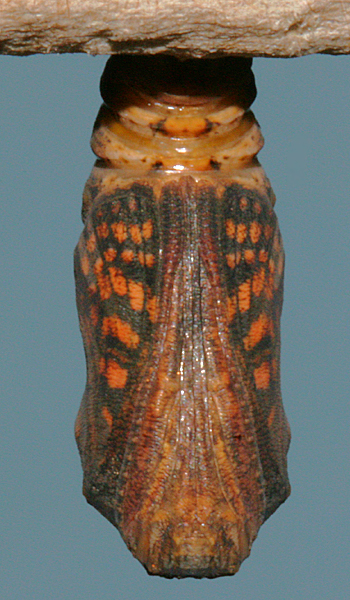 |
#4 Pupa 21 minues before adult female emerged 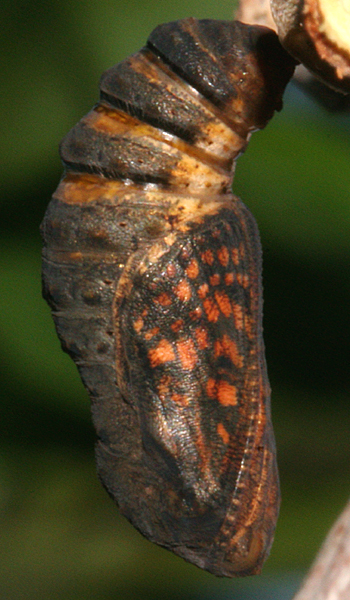 |
#4 Pupa 21 minues before adult female emerged 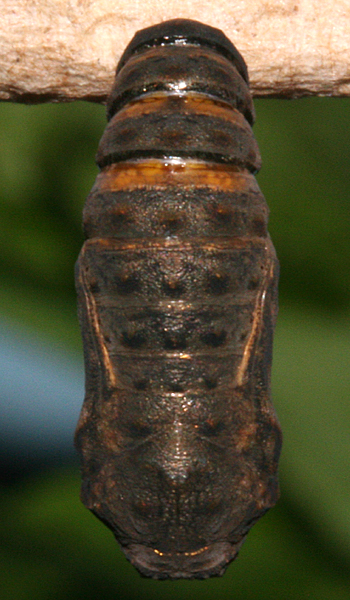 |
| PHOTO DETAILS - ©Nicky Davis -
Jacque Wolfe LOCATION: 22 August 2011 Jacque Wolfe ex. 2 females west of main trail, south side of Sonora Pass, Tuolumne County, California on host plant Solidago multiradiata. GPS: Unknown ELEVATION: 10,000 feet PHOTOS: 1. ova on solidago multiradiata oviposited 24 August 2011. Also oviposited on Eucephalus engelmanii on 25 August 2011 2. First Instar on engelmanii - 2 September 2011 3. Second Instar 6 September 2011 4. Third Instar 10 September 2011 5. Fourth Instar 15 September 2011 - This particular larva ate for a few days then stopped. 6. & 7. This one molted again on 22 September 2011, then went into diapause. All these eventually went into diapause at fourth instar. They were misted daily until October then placed in a container with tiny holes punched into every surface to allow circulation and humidity. the container was placed in a fridge at 31 degrees or just until a little ice formed on the edges of a 8x11 container half full of water. The goal is to keep them from drying out but not so wet that they are immersed in droplets of water. They will be taken out of hibernation as soon as the host plant, Eucephalus engelmannii is available in the spring. 8., 9. Taken out of hibernation 1 May 2012 and given Eucephalus engelmanii for host plant. They were kept in the light 24 hours per day. They started feeding on 7 May 2012. Photo of fifth instar taken 12 May 2012. 10. Table showing three views of a pupa formed on 15 May 2012 and on 22 May when developed and ready to emerge. LIFE HISTORY: Ovum: 7- 8 days Larva: From first instar to hibernation at fourth instar took 20 days. They were taken out of hibernation on 1 May 2012 and were put back on Eucephalus engelmanni. They took about 15 days to mature and form pupae Pupa: 7- 8 days ( #4 was a pupa 7 days 2 hours and forty minutes) Adult: unknown Broods: one Hibernation: These overwinter as larvae Host Plant - click below for photos Solidago multiradiata Eucephalus engelmannii  |