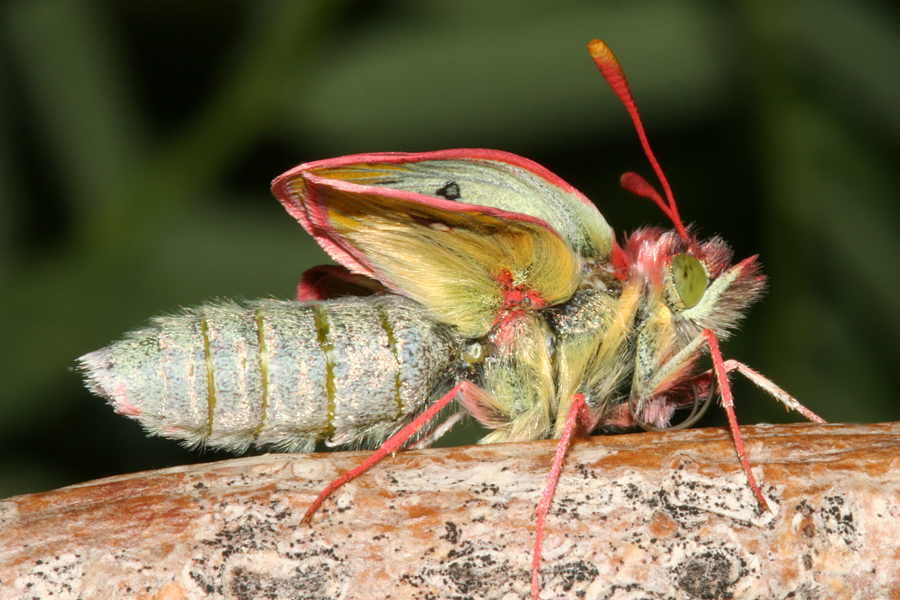
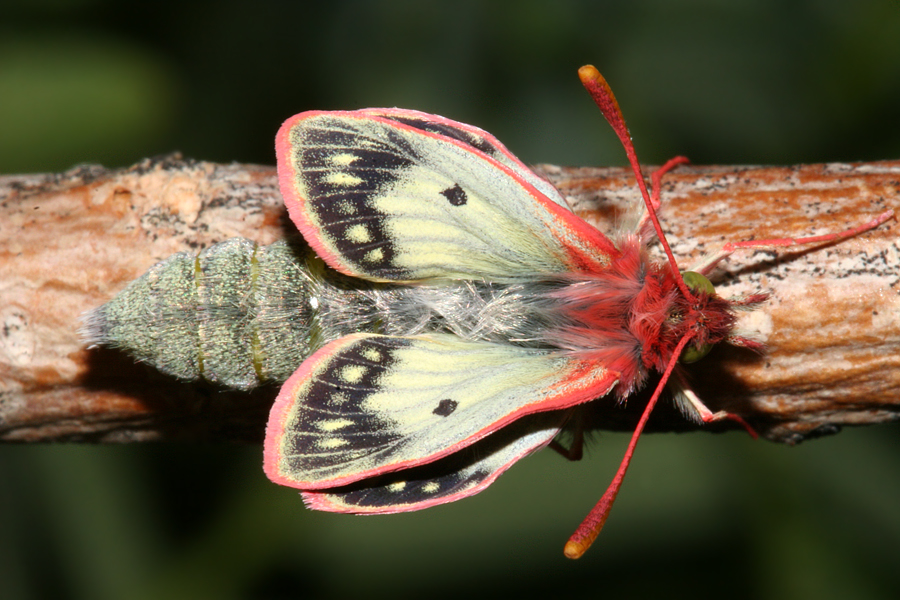
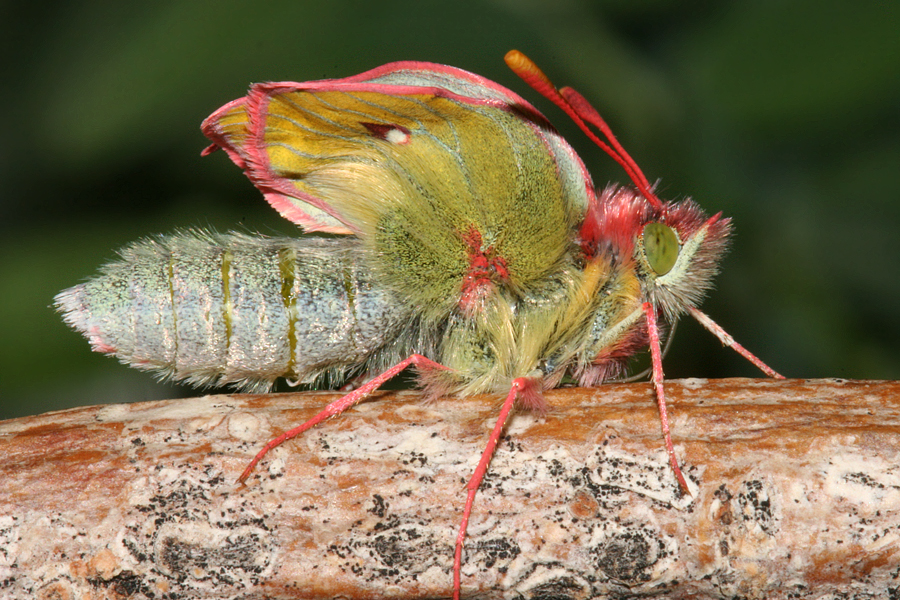
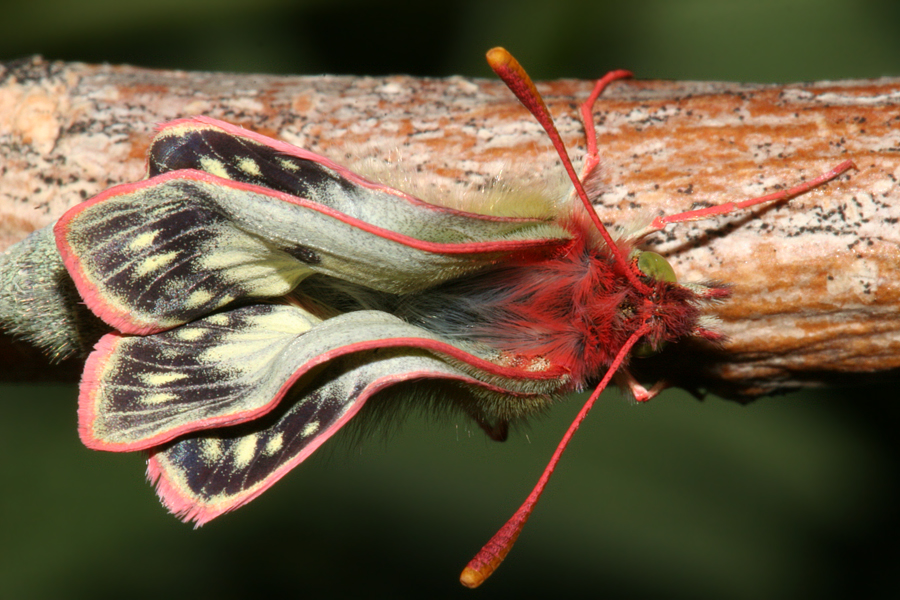
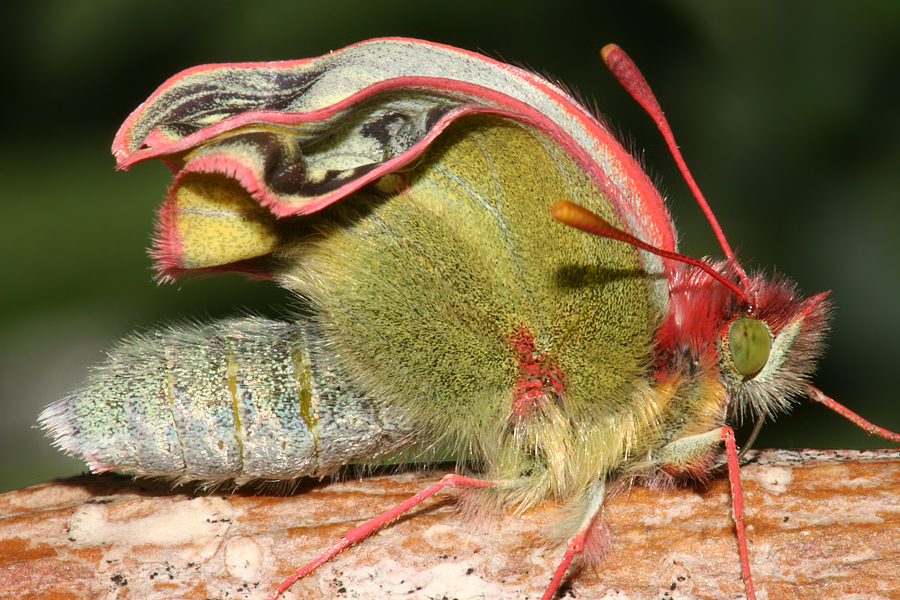
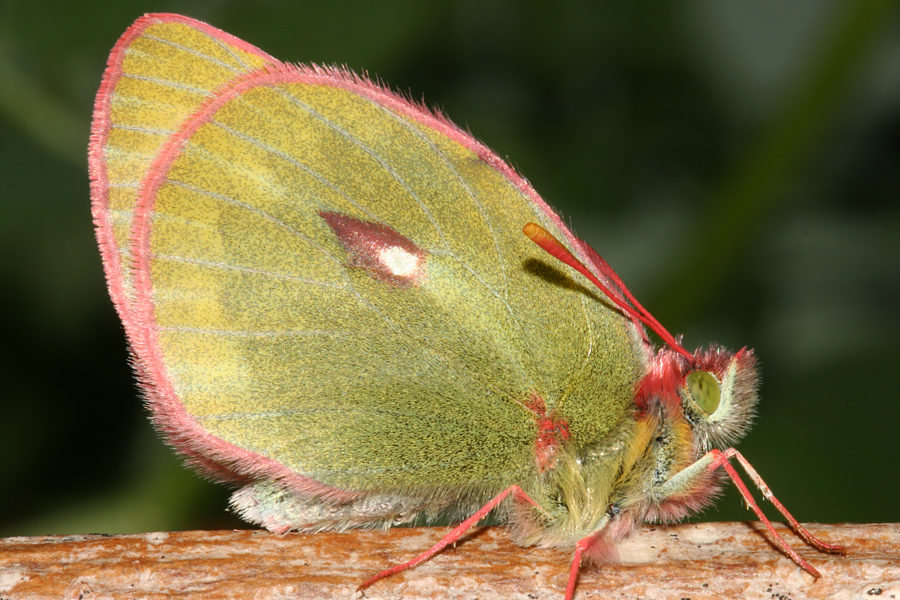
Labrador Sulphur  == Arctic Green Sulphur,  Female Emergence - Colias nastes nastes
Home     -     Butterflies   -   Swallowtails     -   Whites and Sulphurs    -  Coppers, Hairstreaks, Blues & Metalmarks    -     Brushfoots     -     Skippers
Photo & Other  Details     Characteristics & Utah Range Map


Scroll down for all photos of Female Eclosure
For other photos, click on your choice of

MALE     FEMALE      MALE ECLOSURE     
    LARVA     PUPA      SPECIMEN

_____________________________________________________________________________________________________________________________________
_____________________________________________________________________________________________________________________________________


Female Eclosure - 2 September 2009
Femalejust after emerging

inflating wings

inflating wings

inflating wings

inflating wings

drying wings


PHOTO DETAILS - ©Nicky Davis
LOCATION:  located by Jack Harry at Iqaluit, Nunavut Territory, Canada, July 2009
lat 63.76, lon -68.52
ELEVATION: 278 feet

These were reared  at about 75 degrees F. using lights twenty-four hours a day. Nevertheless, nearly all the larvae hibernated at third instar.

PHOTOS:
Photos of Female emerging, inflating and drying wings

LIFE HISTORY:
The female oviposited out 100 eggs on Alpine Astragalus.  About 60 of these hatched.  Of the 60 only 17  would feed on the Astragalus cicer that was available here in Utah.  Two of these went straight through the first year and 15 hibernated.  The ones that hibernated were still quite green when they stopped eating but three turned a yellow-green color.

Ovum: Number of days as ova unknown since the ova were chilled to slow down development.  These hatched 27th to 29th of July 2009.
Larva:  About thirty-five days for the ones that didn't hibernate
Pupa:   About seven to eight days
Adult:  Unknown
Broods: one
Hibernation:  Overwinters as  third instar 


Host Plant
Oviposited on Alpine Astragalus, Astragalus arcticus and reared on Chickpea Milkvetch, Astragalus cicer.  For photos, click on


Astragalus cicer


Back to Top