Great
Basin Wood-Nymph
Cercyonis
sthenele masoni
Immatures
Scroll
down to see all photos
of Immatures
for other photos/information, click on your choice of
_____________________________________________________________________________________________________________________________________
_____________________________________________________________________________________________________________________________________
Larva
#2
First Instar - October 9, 2007
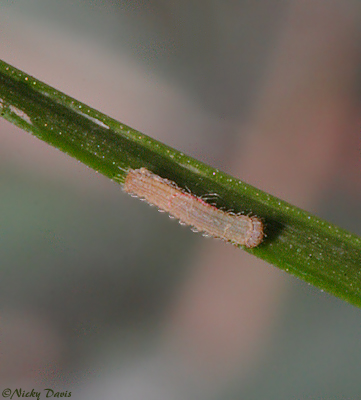
#2
molted toThird Instar October
25th - Photo October 26, 2007
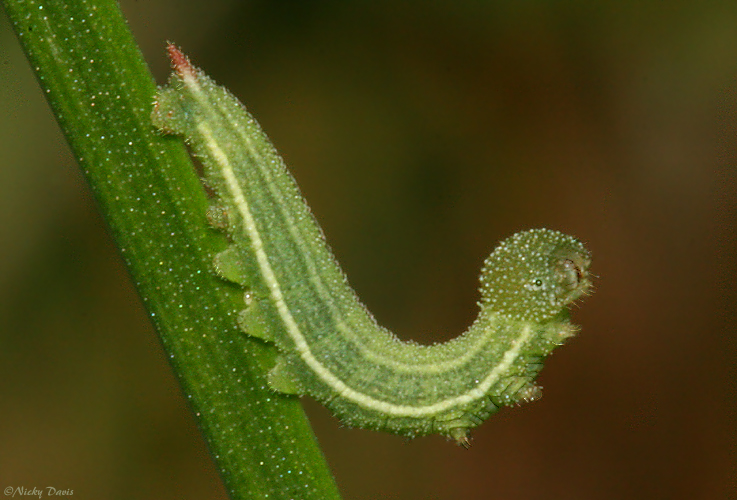
#2
molted to Fourth Instar October
30th - Photo November 04, 2007
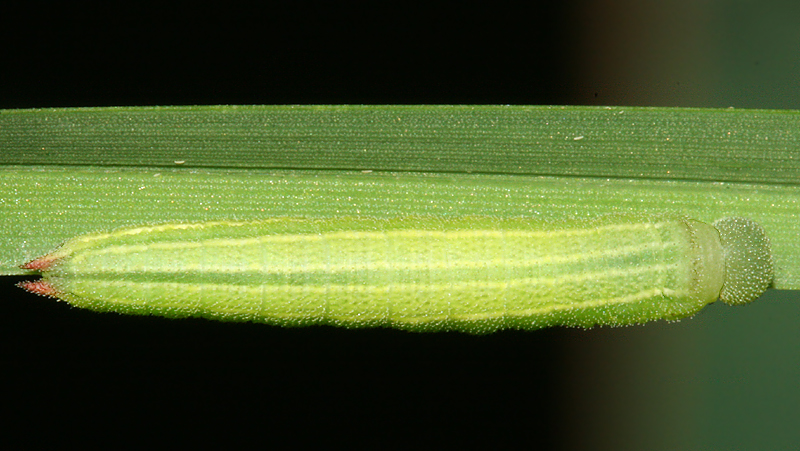
#2
molted to Fifth Instar November
6th - Photo November 09, 2007
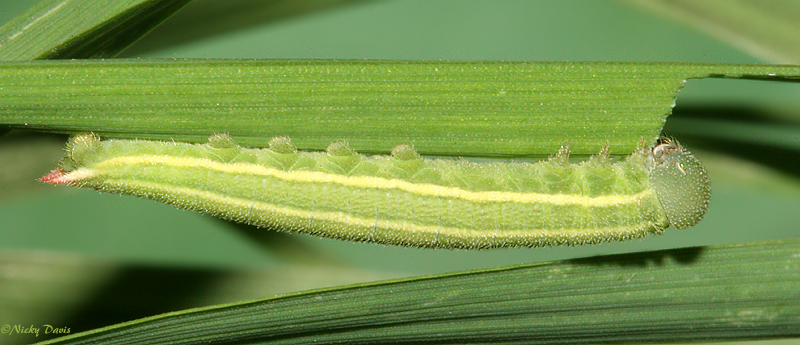
#2
molted to Fifth Instar November
6th - Photo November 11, 2007
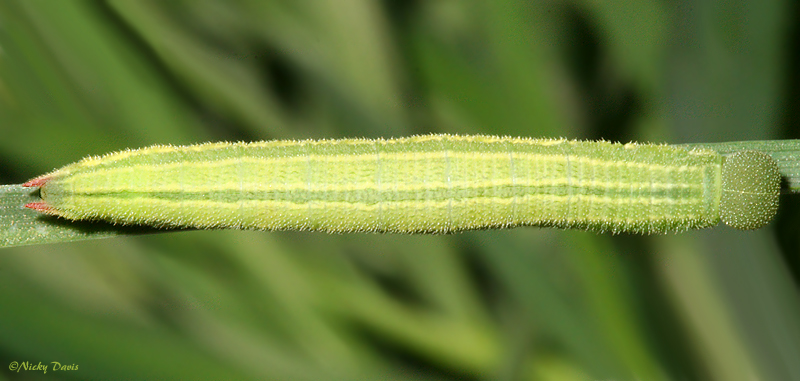
#5
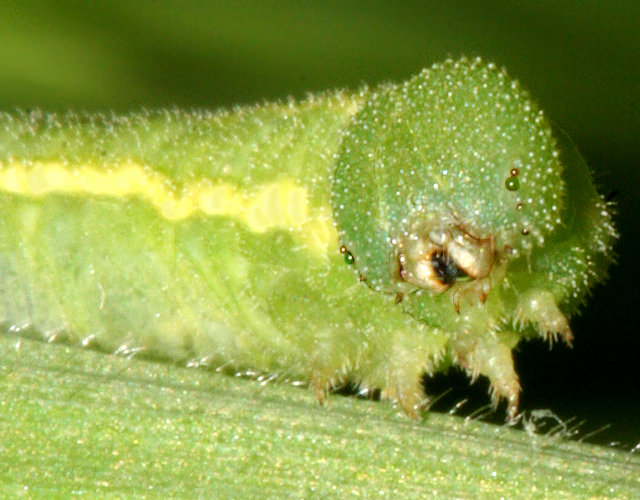
Fifth Instar, close-up of head

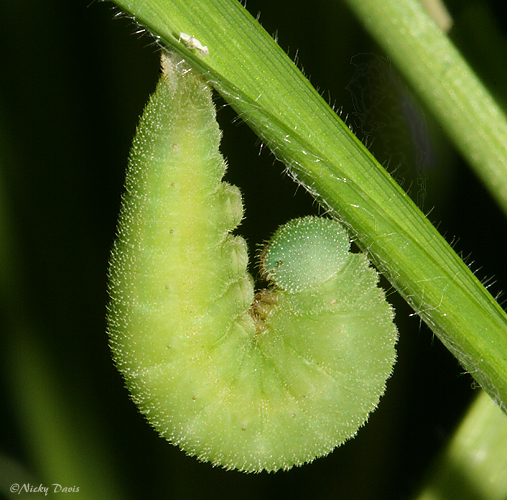
Pre-Pupa
Pupa Development
#2
pupa formed on a brown paper
in the container, November 18th
Photo on November 21, 2007
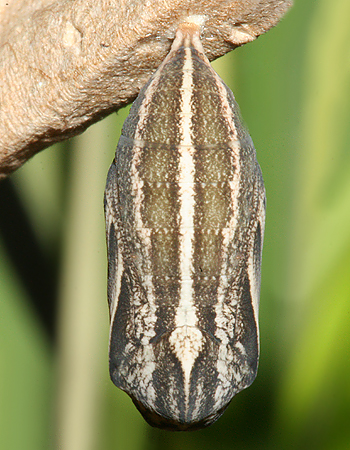 |
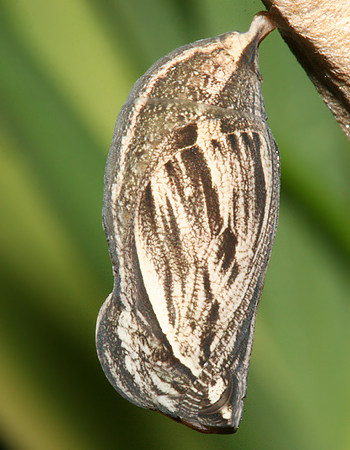
#2 pupa formed
on a brown paper
in the container, November 18th
Photo on
November 21, 2007
 |
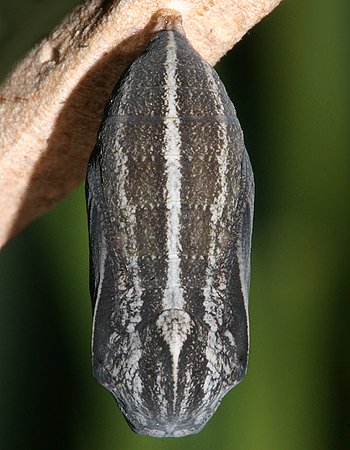
#2
pupa formed November 18th
Photo on December 3, 2007
|
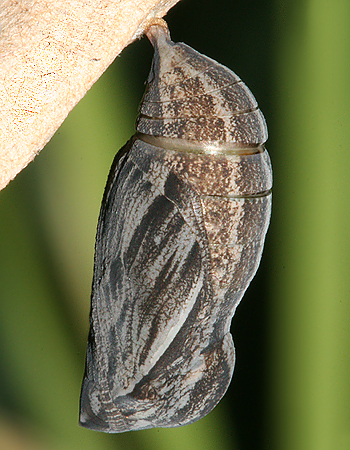
#2
pupa photo on December 04, 2007
1.5 hours prior
to eclosure
|
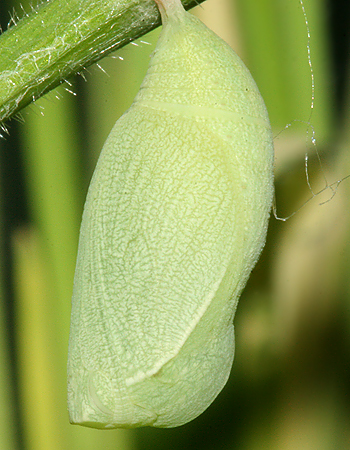
#7
pupa formed a green pupa
on the green grass blade, December 2nd
Photo on December 03, 2007
|
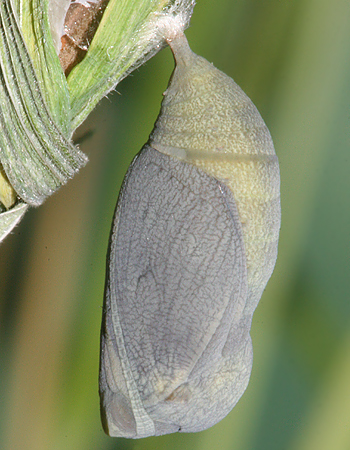
#7
pupa formed a green pupa
on the green grass blade, December 2nd
Photo on December 03, 2007
one day prior to eclosure
|
Photo Details - ©Nicky
Davis
Todd
Stout
collected females July
28, 2007 at 6500 feet, Johnson Pass,
Stansbury Mountains, 1.9 miles ESE Blue Canyon, Tooele County, Utah.
First instar larvae
diapaused five weeks, until October 9, 2007 and were then
set on a blade of blue grass and fed under 24x7 lighting at about 75
degrees. Larva
ate the same day.
Molted to 2nd
instar on October 20, 11 days as active first instar
Molted to 3rd instar on October 25, 5 days as second instar
Molted to 4th instar October 30,
5 days as third instar
Molted 5th instar on November 6, 7 days as fourth instar
10 days as fifth instar
#2 larva began looking for a
suitable spot to pupate on November 15 and went into a "J" formation
the evening of November 16, 2007,
2 days as prepupa.
#2 formed a pupa on November
18, 2007. The adult butterfly emerged December 4, 2007
Pupa formed on a brown paper in the container was brown and
white. Pupa formed on the green blades of the host plant were
green.
#2 diapaused 5
weeks
active larva
stage - 38 days
prepupa stage - 2
days
pupa stage -
16 days
Description
1 3/8 to 1 11/16"
They have two
eyespots and the upper eyespot is larger in the male but about the same
size in the female. Eyespots
are of equal distance from the outer edge of wing. Dark basal half of
hindwing underside is separated from lighter outer half by an irregular
dark line.
Univoltine and the larvae hibernate immediately after emerging.
Habitat
Juniper or
pinyon-juniper woodlands, sagebrush
Host
Grasses

|
|