| West Desert Indra
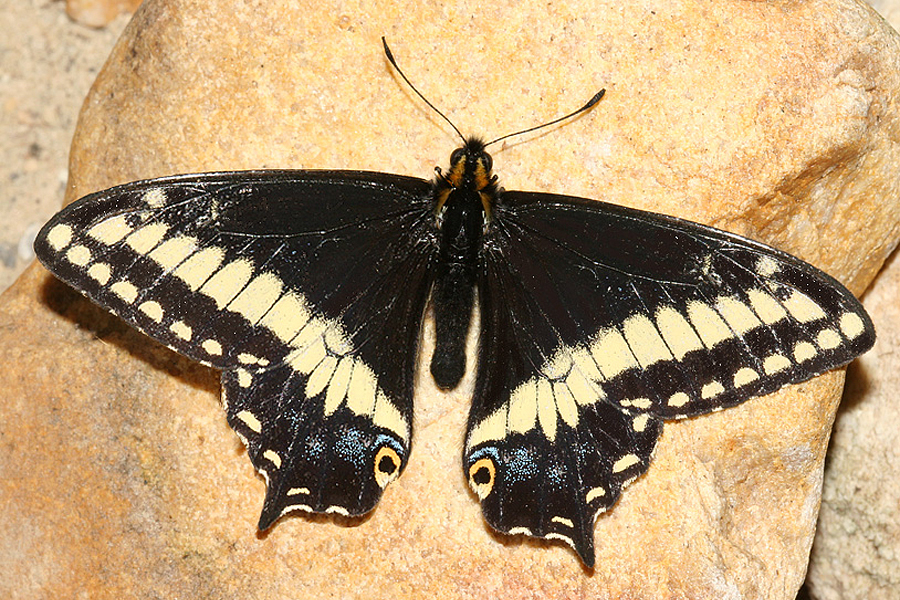
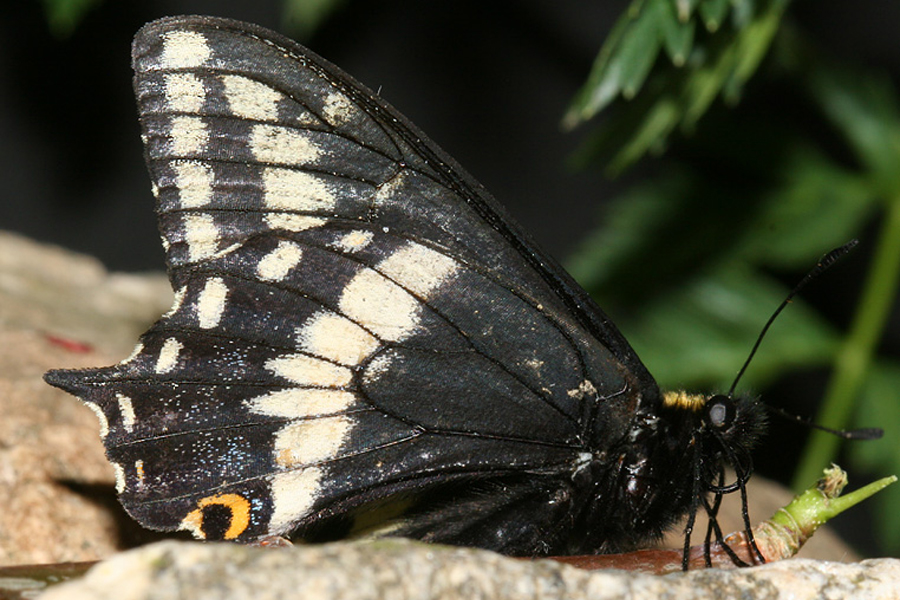
Swallowtail Papilio indra bonnevillensis Adult |
| Home - Butterflies - Details |
|
| Photo
Details - ©Nicky Davis Photos of worn adult butterfly Larva Fifth Instar - June 3, 2006 Pupa Development After pupa formed it was placed in summer conditions, then winter conditions and spritzed every two weeks. On March 5, 2007, the pupa was placed in spring conditions and spritzed at least twice daily. 1., 2. back view and side view of new pupa - June 9, 2006 Other Information All swallowtails purge excess liquid when ready to wander and pupate. At that time, place the larva in a gizmo or lunch sack and allow pupation. Since P. indra "bonnevillensis" has just one flight per year, the pupa must go through simulated summer, winter and spring conditions before it will break diapause and emerge as an adult. These simulated seasons may need to be repeated for three year before the pupa breaks diapause. Provide a summer routine of cupboard until Labor Day. Put pupa in fridge from Labor Day to Thanksgiving; put pupa outside in a terrarium placed in a wooden box from Thanksgiving to Valentines Day--mist spraying or exposing pupa to intermittant humidity about every two weeks or so during cold period; paying specific attention to humidity after Christmas. On Valentines Day, bring pupa out of cold to room temperature. Then, mist spray pupa every other day to see if pupa breaks diapause. The pupa should show signs of development after 12 days or so after having been brought in from the cold. P. indra pupae that are 1 year olds generally do NOT break diapause the first spring; therefore, your one year old will go back in cupboard (if it doesn't break diapause) until next Labor Day and repeat, year after year until done. Five percent of P. indra bonnevillensis emerge after 1 year of humid winter; 80 percent of them emerge after 2 years of humid winters; 15 percent after three years. Host Plant
 |